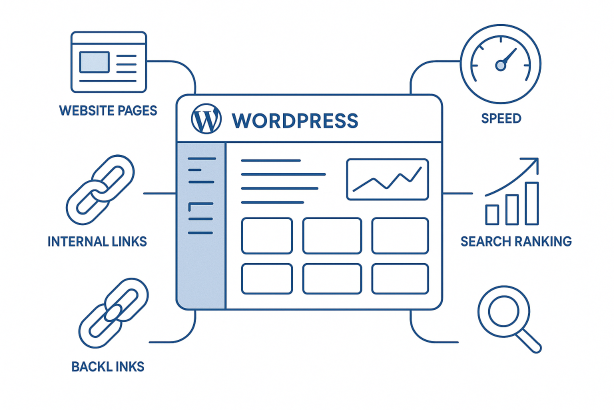

Buying SEO can feel harder than doing it. Small business owners are asked to compare audits, retainers, backlinks, content, local listings, and reporting dashboards, often without a clear way to judge what matters. That is why a practical buyer’s guide is essential. If you are investing in SEO for small business, you do not need a flashy pitch. You need a framework for deciding what will improve visibility, what will support link building, and what will waste budget.
In the Link Building category, the core question is simple: how do you build authority safely and profitably when every vendor promises rankings? The right answer starts with buying the right foundations, understanding what good links actually do, and choosing a provider that earns links in ways that support long-term growth.
This guide will help you evaluate options, compare service models, spot red flags, and choose a smarter path for SEO for small business.
Why SEO for small business needs a link building plan
Many small businesses start SEO by focusing only on pages, keywords, and on-page fixes. Those matter. But once your site is technically functional and your key pages are reasonably optimized, growth often depends on authority. That is where small business link building becomes a real buying decision.
Links matter because they help search engines understand trust, relevance, and reputation. A strong backlink profile can support:
- Better visibility for commercial pages
- Stronger rankings for local and service keywords
- Faster indexation and discovery of new content
- Greater resilience against competitors with similar on-page optimization
- More referral traffic and brand awareness beyond search
For a small business, link building should not be treated as a separate vanity service. It should be part of a broader authority strategy tied to your offers, location, industry, and revenue goals.
What you should buy first before you buy links
One of the biggest mistakes in SEO for small business is buying link building before the site is ready to benefit from it. A quality provider should tell you this upfront. If your core pages are weak, your internal linking is poor, or your local signals are inconsistent, backlinks alone will not solve the underlying issue.
Start with these essentials
- Clear service and location pages: Your site should have pages that match what you sell and where you sell it.
- Strong internal linking: Authority needs pathways. Important commercial pages should be easy to reach and well connected.
- Basic technical health: Indexing issues, broken pages, crawl waste, and poor mobile experience reduce returns from link building.
- Compelling page content: The pages receiving links should deserve to rank and convert.
- Accurate local signals: For local SEO for small business, your business information should be consistent across your site and core listings.
If a provider pushes aggressive outreach before checking these basics, that is a buying red flag. The best link building investments amplify a strong foundation rather than compensate for a weak one.
How link building fits into a small business SEO strategy
Not every business needs the same style of authority building. A local plumber, a boutique law firm, a multi-location clinic, and an ecommerce brand all need links, but the right mix will differ.
For local service businesses
Local link building should usually focus on citations, local directories that actually matter, community organizations, local partnerships, chamber and association listings, sponsorships with real visibility, and earned mentions from regional publishers. These signals strengthen both local relevance and authority.
For professional services
Professional firms often benefit from authoritative industry associations, niche directories, editorial mentions, interviews, expert commentary, and linkable educational resources. The goal is to build trust around expertise as much as rankings.
For ecommerce and broader regional brands
These businesses typically need a wider mix: digital PR, resource-page outreach, content-driven link acquisition, supplier and stockist links, and category-specific placements that support priority product and collection pages.
The buying lesson is simple: do not purchase links as a commodity. Purchase a strategy that fits your business model.
What good SEO for small business looks like from a buyer’s perspective
When comparing small business SEO services, focus less on volume and more on evidence of fit, process, and quality control. Good SEO providers do not sell mystery packages. They explain why specific activities matter for your site.
What to look for in a link building offer
- Relevance first: Links should make sense for your industry, geography, or audience.
- Transparent methodology: You should know whether links come from outreach, partnerships, content promotion, digital PR, directories, or editorial placements.
- Page-level strategy: The provider should explain which pages are being supported and why.
- Anchor text discipline: Over-optimized anchors are risky. Natural brand, URL, and mixed-anchor profiles are healthier.
- Content support: Good links often require link-worthy assets such as guides, local resources, service comparisons, or data-backed explainers.
- Reporting that ties to goals: Reports should connect links to visibility, target pages, and commercial priorities, not just count deliverables.
If you are considering affordable SEO services, remember that affordable is not the same as cheap. The best value is a service that builds useful authority without creating cleanup work later.
Red flags when buying small business link building
Bad link building is expensive, even when the invoice looks small. It can drain budget, weaken trust, and leave you dependent on constant replacement work.
Watch for these warning signs
- Guaranteed rankings: No provider controls search results.
- Guaranteed number of “high DA” links without context: Metric-led selling often hides poor relevance and weak traffic value.
- Private blog network language or vague “proprietary network” claims: If the source of links is intentionally obscured, be cautious.
- One-size-fits-all packages: A local bakery and a B2B consultancy should not receive the same link plan.
- No review of your site before quoting: Serious providers need to assess your pages, competitors, and current profile first.
- Overuse of exact-match anchor text: This is a common sign of low-quality tactics.
- No conversation about content: Sustainable link acquisition usually needs assets worth citing.
A good SEO agency for small business should be willing to explain what they will not do as clearly as what they will do.
Comparing your buying options
Small businesses usually choose between doing SEO in-house, hiring a freelancer, working with an agency, or using a productized service. Each model can work if expectations are clear.
| Option | Best For | Pros | Cons |
|---|---|---|---|
| DIY | Very small budgets, strong owner involvement | Low cash cost, full control, deep learning | Slow execution, steep learning curve, inconsistent outreach quality |
| Freelancer | Focused projects, lean teams | Flexible, often cost-efficient, direct communication | Capacity limits, process may vary, broader strategy may be missing |
| Agency | Businesses needing strategy plus execution | More resources, wider expertise, scalable delivery | Higher cost, quality varies, account management matters |
| Productized service/platform | Businesses wanting structure and repeatability | Clear deliverables, easier budgeting, simpler workflow | May need internal input, less custom than full consulting |
The right choice depends on your stage, not just your budget. If your business needs full strategic support, a cheap vendor may cost more in lost time than a stronger partner. If your priorities are defined and you need dependable execution, a focused service can be a better buy than a large retainer.
How to evaluate SEO packages for small business
Many buyers compare providers based on monthly price. A better approach is to compare them based on business fit. When reviewing SEO packages for small business, ask what is actually included, what is customized, and what supports link acquisition versus what is generic account maintenance.
Use this checklist when reviewing proposals
- Are target keywords mapped to real service or location pages?
- Is there a clear link acquisition plan tied to those pages?
- Does the proposal include on-page support and internal linking?
- Are local SEO needs covered if your market depends on geography?
- Will content assets be created to support outreach?
- What approvals do you have over placements, content, and anchors?
- How will success be measured over time?
- What happens if your starting foundation is weak?
Good proposals answer these points without hiding behind jargon. If a package sounds polished but leaves you unsure what will happen each month, keep looking.
Budgeting for SEO for small business without overpaying
There is no universal price for link building because scope depends on competition, market, assets, and goals. Still, there are sensible ways to think about budget.
Spend based on competitiveness and commercial value
If you operate in a competitive city or high-value vertical, you will usually need stronger links, better content, and more deliberate outreach. If you serve a narrower area or a lower-competition niche, a lighter but disciplined campaign may be enough.
Prioritize compounding work
For most small businesses, the best investments tend to be:
- Strengthening key money pages
- Creating a few truly useful assets for outreach
- Building relevant local and industry authority
- Improving internal linking so authority flows to priority pages
What you want to avoid is paying recurring fees for activity that does not accumulate value. Monthly reporting can be useful. Monthly busywork is not.
Questions every buyer should ask before signing
A strong vendor will welcome detailed questions. Use the answers to judge maturity, not just confidence.
Ask these before you buy
- What type of links do you pursue for businesses like mine?
- How do you decide which pages should receive link equity?
- How do you balance local relevance, industry relevance, and authority?
- What role does content play in your link building process?
- How do you avoid low-quality placements and manipulative patterns?
- What can I expect in the first 90 days in terms of setup and deliverables?
- What will you need from me to move quickly?
- How do you report progress in a way that connects to leads or sales opportunities?
The goal is not to find the vendor with the slickest answer. It is to find the one whose process is clear, disciplined, and aligned with your business reality.
A practical buying framework for small businesses
If you want a simple decision model, use this sequence:
- Fix the foundation: Make sure your important pages, technical basics, and internal links are in shape.
- Define commercial priorities: Identify the services, locations, or categories that matter most.
- Choose the right authority strategy: Local, niche, editorial, digital PR, partnerships, or a mix.
- Buy transparency: Pick a provider that explains methods, targets, and reporting.
- Review for fit, not volume: Ten relevant links can be more useful than a larger pile of weak placements.
- Commit long enough to judge properly: Link building is cumulative. Give good work time to compound.
This is the most reliable way to approach SEO for small business without getting distracted by vanity metrics or one-month promises.
When to choose Rabbit SEO
If you want a more structured path to growth, Rabbit SEO can help you turn SEO from an unclear expense into a measurable system. Instead of guessing what to buy next, you can focus on the pages, authority signals, and link building priorities that have the best chance to move the business forward.
Ready to make a smarter SEO investment? Explore Rabbit SEO to plan stronger pages, improve internal structure, and support a link building strategy that compounds over time. Visit Rabbit SEO Blog to keep learning, or take the next step with a platform and process built for practical growth.
Conclusion: buy SEO for small business like an owner, not a spectator
The best SEO for small business is not bought through hype. It is bought through clarity. You need a provider or system that understands your pages, your local market, your commercial goals, and the role of link building in reaching them.
If you remember only one thing from this guide, let it be this: buy strategy before volume, relevance before metrics, and sustainable link building before shortcuts. That is how small businesses build authority that lasts, rankings that hold, and visibility that turns into real business value.