
Most teams do not struggle because they lack access to AI SEO tools. They struggle because the tools sit on top of a weak process. Research lives in one place, content briefs in another, technical fixes in a ticket queue, and reporting in a spreadsheet that no one fully trusts. The result is familiar: activity goes up, but execution stays fragmented.
This guide takes a case-study approach to that problem. Instead of presenting a single dramatic success story or making inflated claims, it breaks down the workflow pattern that strong search teams tend to follow. If you want AI SEO tools to support rankings, content quality, and operational speed, you need a system that tells each tool what job it owns, what output it should create, and who signs off before the work moves forward.
The goal is simple: build a practical workflow that turns software into usable SEO output. That means clearer keyword priorities, stronger briefs, cleaner publishing standards, tighter internal linking, and reporting that helps you decide what to do next.
Why AI SEO tools underperform without a workflow
Buying more software rarely fixes an SEO process on its own. In most teams, the real bottleneck appears in one of four places:
- Inputs are weak. Pages are targeted without clear search intent mapping, so the content starts from the wrong premise.
- Outputs are vague. A tool surfaces opportunities, but no one defines what a finished brief, optimized page, or technical ticket should look like.
- Ownership is unclear. SEO, content, product, and development all touch the workflow, but no one owns the handoff between them.
- Quality control happens too late. Teams publish quickly, then discover gaps in structure, links, metadata, or page intent after indexation.
That is why mature teams treat tools as workflow components rather than magic levers. A good stack supports decision-making. It does not replace it.
A case-study framework for using AI SEO tools well
In the most useful case studies, the real lesson is not the final chart. It is the operating model behind the chart. Applied to AI SEO tools, that operating model usually has five characteristics:
- The team defines clear business goals before running research.
- Each tool is assigned to a specific stage of the SEO workflow.
- Every output has a review step before publication or implementation.
- Technical, content, and internal linking tasks are managed together.
- Reporting is tied to decisions, not just dashboard screenshots.
If you build around those principles, your stack becomes easier to scale and much easier to evaluate.
Step 1: Start with goals, page types, and guardrails
Before choosing workflows or subscriptions, define what kind of SEO work matters most right now. Different goals require different operating rhythms.
Decide which pages the workflow must support
Your process for a product page, blog article, category page, or comparison page should not be identical. Each page type has its own search intent, conversion role, and editorial standard. Start by naming the page types you are actively improving this quarter.
- Commercial landing pages
- Category or service pages
- Editorial articles
- Programmatic or template-driven pages
- Support or documentation pages
That one decision prevents a common mistake: forcing every keyword and every page into the same content model.
Set non-negotiable quality rules
Your team needs written guardrails before any research or drafting begins. Useful examples include:
- Primary intent must be identified before a brief is approved.
- Existing ranking pages must be reviewed before net-new creation.
- Each page must have a unique commercial or informational role.
- Internal links must be planned at the brief stage, not after publication.
- Technical requirements must be checked before a page goes live.
These rules keep your SEO workflow consistent, especially when multiple contributors are involved.
Step 2: Map AI SEO tools to workflow stages, not feature lists
A stack becomes easier to manage when you assign software to decisions rather than broad categories. Instead of asking, “What features does this tool have?” ask, “What decision does this tool help us make?”
| Workflow stage | Main decision | Useful output | Owner |
|---|---|---|---|
| Opportunity discovery | Which topics deserve attention now? | Topic lists, keyword groups, gap notes | SEO strategist |
| Prioritization | Which pages or terms fit business goals? | Priority queue by page type and intent | SEO lead |
| Brief creation | What must the page cover to satisfy intent? | Structured briefs, outline, entities, link targets | Content strategist |
| Content production | How should the page be drafted and refined? | Draft support, optimization suggestions, revisions | Writer or editor |
| Technical review | Can this page be crawled, indexed, and understood? | Issue list, fix tickets, implementation notes | Technical SEO or developer |
| Internal linking | How does this page connect to the site? | Link targets, anchor guidance, hub relationships | SEO strategist |
| Performance review | What should be updated next? | Refresh queue, cannibalization notes, test ideas | SEO lead |
This is where many teams simplify their stack. If two tools support the same decision but create conflicting outputs, remove one from the workflow or give each a narrower role.
Step 3: Build a keyword research workflow that ends in prioritization
A strong keyword research workflow should not end with a giant export. It should end with a ranked list of pages to create, update, consolidate, or de-prioritize.
Start with topic clusters, not isolated terms
Use research to identify themes around your products, services, use cases, and audience questions. Then organize those themes into clusters based on search intent mapping. This helps you avoid two common issues: creating multiple weak pages for the same topic and publishing a page that targets an intent your site cannot satisfy.
Review the current SERP before you assign content format
Do not assume every keyword deserves a blog post. Review what already ranks and note the dominant format:
- Editorial guides
- Product or service pages
- Comparison pages
- Category pages
- Tools, templates, or calculators
If the dominant result type does not match the page you planned, stop and reassess.
Turn research into a decision queue
Every keyword cluster should be assigned one of the following next actions:
- Create: There is no relevant page and the opportunity fits your goals.
- Refresh: You already have a page, but it lacks depth, focus, or structural alignment.
- Merge: Multiple pages compete for the same topic and need consolidation.
- Ignore: The query is off-intent, low-value, or better handled elsewhere.
This single step transforms raw research into production planning.
Step 4: Use AI SEO tools to improve briefs before content is written
The brief is where most quality problems either get solved or become expensive later. If your content optimization tools are only used after drafting, you are introducing SEO too late in the process.
What a strong brief should include
- Primary topic and supporting subtopics
- Search intent summary
- Target page type
- Proposed title angle
- Questions the page must answer
- Entities, examples, or concepts to cover
- Internal linking strategy
- Conversion goal or next-step action
A good brief narrows ambiguity. Writers should know what must be covered, what should be avoided, and how the page fits the site architecture.
Keep editorial judgment in the loop
Even with strong software support, briefing should not become a copy-and-paste exercise. Review every outline for:
- Originality of angle
- Fit with brand voice
- Overlap with existing content
- Accuracy of topic framing
- Commercial relevance
This is the point where premium content separates itself from automated content. The workflow should help your team think more clearly, not publish more noise.
Step 5: Connect content production, on-page SEO, and internal linking
Many teams treat writing, optimization, and linking as separate steps owned by different people. That usually creates friction. Instead, connect them inside one production lane.
Use an on-page SEO checklist before publication
A simple on-page SEO checklist keeps quality consistent across contributors. Your checklist can include:
- Title and heading structure match intent
- Introduction states the page purpose clearly
- Subtopics align with the approved brief
- Internal links point to relevant hub and supporting pages
- External references are relevant and necessary
- Metadata supports the page angle without duplication
- Images, tables, or examples improve usability
- Calls to action fit the query stage
Plan internal links before the page goes live
An effective internal linking strategy should not be an afterthought. During production, identify:
- Pages that should link into the new page
- Pages the new page should support
- Anchor text variations that fit naturally
- Any orphaned pages that need reintegration
When internal linking is built into the brief and QA process, pages launch with stronger context and are easier to maintain.
Step 6: Add technical SEO review to the same operating rhythm
Content teams often move faster than implementation teams, so technical issues pile up outside the publishing workflow. That is a mistake. A technical SEO audit should be connected to production, not treated as a separate event that happens once in a while.
Technical checks that belong in routine workflow
- Indexability and crawl access
- Canonical setup
- Redirect behavior
- Structured data requirements
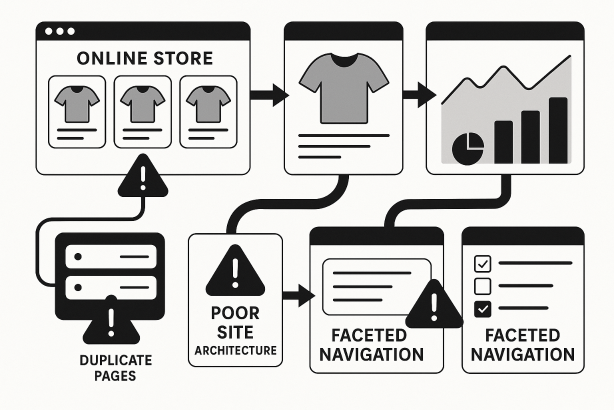
- Pagination or faceted navigation issues
- Template-level metadata controls
- Page speed and rendering concerns
Not every page needs a deep technical review, but every publishing lane needs a checklist for the issues most likely to block performance.
Create a ticket standard for technical fixes
When SEO recommendations reach development teams, vague requests slow everything down. Each ticket should specify:
- The issue
- The affected template or URLs
- The reason it matters
- The desired implementation
- The validation method after release
That level of clarity reduces rework and keeps SEO automation from becoming operational chaos.
Step 7: Establish approval points and reporting rules
The fastest workflows still need checkpoints. Without them, teams confuse speed with progress.
| Checkpoint | Question to answer | Approver |
|---|---|---|
| Research approval | Does this topic align with goals and page type? | SEO lead |
| Brief approval | Does the outline satisfy intent and avoid overlap? | Editor or strategist |
| Pre-publish QA | Does the page meet content and technical standards? | Editor and SEO owner |
| Post-publish review | What should be improved, expanded, or linked next? | SEO lead |
Reporting should also stay decision-led. Instead of tracking everything, focus on metrics that tell you what action to take next: which pages need refreshes, which clusters are missing supporting content, which templates need technical fixes, and where internal link coverage is weak.
A sample weekly workflow for a lean team using AI SEO tools
If your team is small, simplicity matters more than scale. A lean operating model can still be effective if the cadence is consistent.
| Day | Primary activity | Output |
|---|---|---|
| Monday | Review research, gaps, and priorities | Approved page queue |
| Tuesday | Create or refine briefs | Writer-ready briefs |
| Wednesday | Drafting and editorial review | Near-final content |
| Thursday | On-page QA, internal links, technical checks | Publish-ready pages |
| Friday | Performance review and refresh planning | Next-week action list |
This kind of rhythm keeps your SEO workflow manageable. It also makes it easier to see where tools are genuinely helping and where they are simply adding steps.
Common mistakes when teams adopt AI SEO tools
- Using every tool for every task. Overlap creates noise and conflicting recommendations.
- Skipping intent review. Ranking problems often begin with misaligned page format.
- Optimizing after the fact. SEO should shape the brief, not just the revision pass.
- Ignoring site architecture. Great pages still need hubs, links, and context.
- Separating content from technical SEO. Both affect outcomes and should share a workflow.
- Reporting without action. Dashboards are only useful if they change the next sprint.
How to choose AI SEO tools for your stack
When evaluating AI SEO tools, choose based on operational fit. The right question is not whether a platform can do everything. It is whether it improves the specific decisions your team makes each week.
Look for tools that:
- Support your current page types and publishing model
- Reduce manual steps in research, briefing, QA, or reporting
- Make collaboration easier across SEO, content, and development
- Produce outputs your team will actually use
- Fit the level of editorial control your brand requires
If a tool creates more review work than it saves, it is not improving the workflow.
Turn the workflow into a working system with Rabbit SEO
If you want a cleaner way to organize research, priorities, optimization, and ongoing page improvement, Rabbit SEO can help you build a more disciplined operating model. Instead of treating SEO as a set of disconnected tasks, you can create a workflow that supports planning, execution, and continuous review in one place.
Explore Rabbit SEO to streamline your SEO workflow, tighten your content process, and make your optimization decisions easier to manage week after week.
Final thoughts on AI SEO tools
The best use of AI SEO tools is not faster output for its own sake. It is better execution. When research leads to clear priorities, briefs shape stronger pages, technical review happens on time, and reporting drives the next decision, the stack starts to work like a system instead of a collection of subscriptions.
That is the real lesson from a case-study mindset. Sustainable SEO performance comes from repeatable workflow design. Choose tools that serve the process, assign clear ownership, protect quality at each stage, and revisit the workflow often enough to keep it sharp.