
For many merchants, SEO for Shopify starts with the basics: title tags, collection page copy, product descriptions, site speed, and a blog. Those foundations still matter. But they are no longer enough on their own, especially in competitive categories where dozens of stores sell similar products and rely on the same platform structure.
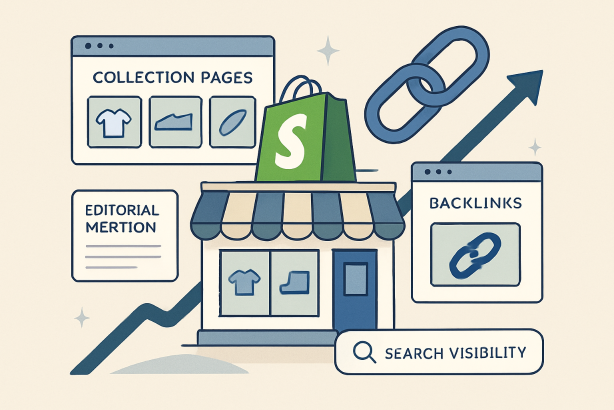
One of the hottest shifts in SEO for Shopify is the move from isolated on-page work to authority-led link building. In practical terms, that means building pages worth citing, promoting collections and guides that deserve editorial attention, and earning links that strengthen the parts of the store that actually drive revenue.
This matters because Shopify stores often hit a ceiling. Product pages rarely attract natural backlinks. Blog posts can bring top-of-funnel traffic but may not help core commercial URLs unless the internal linking is strong and the content strategy is deliberate. The stores pulling ahead are treating link building as a commercial growth channel, not a side project.
Below is a practical look at the trends shaping Shopify link acquisition right now, what types of pages deserve promotion, and how to turn stronger authority into rankings and sales.
Why SEO for Shopify Has Become a Link Building Game
Shopify has made it easier than ever to launch a store, which also means it has become easier than ever to blend in. Templates are cleaner, checkout is trusted, and core technical features are accessible. The result is that many stores have competent foundations. What separates them in organic search is often authority.
Authority in ecommerce SEO is not just about homepage backlinks. It is about whether the store has enough trust and relevance to rank collection pages, category hubs, and other commercial assets for meaningful queries. If two stores are equally well optimized on-page, the one with better supporting links usually has the advantage.
This is why link building has moved closer to the center of ecommerce SEO. On Shopify in particular, the challenge is not simply to get more backlinks. It is to earn links that support a specific site architecture:
- Collection pages that target category terms
- Buying guides that capture research intent
- Comparison pages that help buyers decide
- Brand and about pages that reinforce trust
- Blog or editorial hubs that serve as link magnets and internal link sources
In other words, the best link building for Shopify stores is no longer random outreach to any page that can rank. It is structured support for the URLs that influence revenue.
The Hot Trend in SEO for Shopify: Linkable Commerce Assets
The strongest current trend in SEO for Shopify is simple: smart stores are creating linkable commercial content instead of relying on generic blog posts or expecting product pages to attract links by themselves.
A linkable commerce asset sits between pure editorial content and a hard-sell landing page. It teaches, compares, curates, or explains while still guiding visitors toward products or collections. This format works well because publishers, bloggers, niche communities, and industry sites are much more likely to cite a useful resource than a standard product page.
What a linkable commerce asset looks like
- Collection page upgrades: category pages with expert introductory copy, FAQs, use cases, and selection guidance
- Buying guides: pages built around questions buyers actually ask before purchasing
- Comparison content: feature-by-feature pages that help users understand differences between options
- Trend or seasonal hubs: curated pages for gift ideas, seasonal demand, or use-case bundles
- Resource pages: care instructions, sizing help, material explainers, ingredient breakdowns, or compatibility guides
This trend matters because it aligns link acquisition with buyer intent. Instead of forcing outreach around content that never contributes to conversions, you create pages that can both earn links and assist sales.
Where to Focus Shopify Link Building First
Not every page deserves outreach. A common mistake in Shopify link building is spreading effort across dozens of URLs with no clear business priority. Start with the pages where better authority can create the most leverage.
1. Collection pages with clear search intent
For most stores, collection pages are the most important SEO landing pages. They target category-level queries, sit closer to conversion, and can rank for broad demand terms. Yet many collection pages are thin and receive little off-page support.
Upgrading collection page SEO and then building links to those collections directly, or to supporting guides that internally link to them, is one of the most efficient moves a Shopify store can make.
2. Buyer education pages that support product discovery
Many customers do not search for a specific product name. They search by need, use case, or comparison language. Pages that answer those questions can attract links from media, blogs, partners, and communities while feeding qualified traffic into relevant collections.
These pages also support product page optimization indirectly. When informational pages help a category rank better and pass relevance internally, product URLs often benefit from stronger discovery and contextual linking.
3. Brand story, founder, and expertise pages
In crowded sectors, editorial sites often want to understand who is behind a store and why the business is credible. A strong about page, founder page, sustainability page, or product philosophy page can become a natural destination for citations, interviews, partnerships, and press references.
This is especially important for stores selling products where trust and expertise influence conversion.
4. Seasonal and trend-led landing pages
Hot-topic merchandising can become a link opportunity when handled with real editorial value. Gift guides, occasion collections, trend roundups, or seasonal buying hubs can earn coverage if they are thoughtfully built and supported with timely outreach.
The key is to make them useful enough to reference, not just promotional enough to sell.
| Page Type | Link Potential | Commercial Value | Best Use |
|---|---|---|---|
| Collection page | Medium | High | Category rankings and revenue growth |
| Buying guide | High | Medium to high | Attract links and support product discovery |
| Comparison page | Medium to high | High | Capture decision-stage traffic |
| Brand or expertise page | Medium | Medium | Trust, PR, and entity signals |
| Seasonal hub | Medium | High during peak periods | Timely campaigns and outreach angles |
How to Build Links That Move SEO for Shopify Forward
Once the right assets exist, outreach becomes far more effective. The strongest current tactics are less about bulk link placement and more about earning relevant editorial references.
Digital PR for ecommerce that starts with products, not press releases
Digital PR for ecommerce works best when the pitch is rooted in expertise, curation, trend interpretation, or product insight. That could mean offering editors a well-organized gift resource, a specialist guide, or commentary tied to what buyers need to know.
For Shopify merchants, this is often more realistic than trying to manufacture news. You already have inventory knowledge, niche expertise, customer questions, and merchandising judgment. Turn that into linkable stories and reference-worthy pages.
Manufacturer, supplier, and partner link opportunities
One of the most underused forms of Shopify backlinks comes from business relationships that already exist. Suppliers, distributors, stockist directories, associations, certifications, collaborators, and retail partners can all be valid sources of relevant links.
The opportunity is not just to get listed. It is to improve the destination. If the linked page is a robust collection, brand page, or educational resource, the backlink carries more strategic value.
Editorial seeding through curated resources
Many publishers and niche bloggers need credible products and resources to reference. Pages such as buyer guides, seasonal picks, or category explainers can be seeded to relevant writers and curators without sounding forced. This is especially effective when the content is visually clear, easy to scan, and genuinely useful.
For stores with strong visual merchandising, this can outperform traditional guest posting because the link is earned in context.
Unlinked mention reclamation
As stores grow, mentions often appear without a clickable link. Reclaiming these references is still one of the cleanest link building tactics available. It works particularly well for branded product names, founder mentions, media appearances, event listings, and product placements.
When you do this, choose the destination carefully. Sometimes the homepage is right. Often a collection, campaign, or relevant brand page is better.
Resource page and community outreach
Resource pages remain valuable when the fit is strong. Tutorials, compatibility pages, care guides, ingredient explainers, and category education hubs can all earn inclusion on relevant community sites, niche directories, associations, and educational resources.
The quality filter matters. If the link exists only because someone accepts every submission, it will rarely help much. If the site curates credible resources for a specific audience, the link can be both useful and durable.
Technical Foundations That Support SEO for Shopify
Even great link building will underperform if the store leaks authority or sends mixed signals. Before scaling outreach, tighten the parts of technical SEO for Shopify that affect crawlability, consolidation, and internal equity.
Strengthen internal links from high-authority pages
If your blog, homepage, or press mentions attract the majority of links, make sure those pages pass value toward revenue-driving collections and guides. Internal linking should be intentional, descriptive, and tied to your keyword hierarchy.
Control duplication and weak archive pages
Shopify stores can generate thin or redundant URLs through tags, filters, variants, and inconsistent collection structures. If multiple URLs compete or low-value pages remain indexable, link equity can scatter. Review templates, canonicals, and indexation rules so authority flows to the pages you actually want to rank.
Upgrade thin collection pages before promoting them
Outreach is easier when the destination is clearly useful. A collection page should not just be a product grid. Add concise category copy, filtering logic, FAQs, trust signals, and internal links to related buying guides. This improves both conversion potential and editorial credibility.
Align anchors with topic relevance
You do not need aggressive anchor text to improve SEO for Shopify. In fact, natural anchors usually work better over time. The goal is thematic relevance across the entire linking environment: the referring page topic, the destination page intent, and the internal links supporting that destination.
A 90-Day SEO for Shopify Link Building Plan
If you want a focused starting point, keep the first quarter simple and commercial.
- Weeks 1 to 2: identify priority collections, supporting guides, and technical issues that dilute authority
- Weeks 3 to 4: upgrade page quality for the assets you plan to promote
- Weeks 5 to 8: build outreach lists across media, partners, suppliers, communities, and niche publishers
- Weeks 9 to 12: run campaigns around buying guides, seasonal hubs, comparisons, and mention reclamation
The point is not to launch every tactic at once. It is to connect a few link-worthy pages to a few realistic acquisition channels and measure whether rankings improve for the target collections those pages support.
Common Mistakes in SEO for Shopify
- Building links only to the homepage while leaving collections unsupported
- Publishing generic blog posts with no clear outreach angle and no internal path to revenue pages
- Promoting thin collection pages before improving user value
- Ignoring technical cleanup that weakens the impact of new backlinks
- Chasing volume over relevance instead of earning links that reinforce topical authority
The stores that win are usually the ones with the clearest structure. They know which pages matter, what each page is supposed to rank for, and how link acquisition supports that commercial map.
Make SEO for Shopify Work Harder With a Better Link Strategy
The current direction of SEO for Shopify is clear: stores need more than polished templates and optimized metadata. They need authority that is built on useful commercial assets, strong internal architecture, and deliberate link acquisition.
If your store has already handled the basics, the next growth lever is often not more product copy. It is better promotion of the right pages.
Want a faster path to stronger Shopify rankings? Use Rabbit SEO to audit your store, spot collection page opportunities, improve internal linking, and focus your link building on the URLs most likely to drive revenue.
In a market where many stores look technically similar, SEO for Shopify becomes a question of trust, relevance, and authority. The brands that treat link building as part of merchandising strategy, not separate from it, are the ones most likely to keep gaining ground.