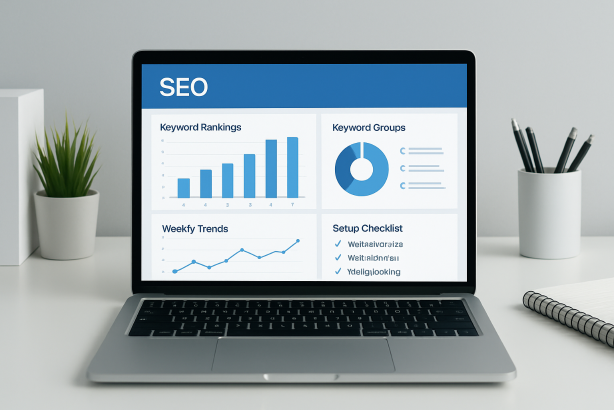

Rank tracking software is one of the few SEO tools that becomes more useful the longer you use it. A single ranking snapshot can be interesting, but a structured tracking setup shows trends: which pages are gaining visibility, which keyword groups are slipping, and where the next optimization opportunity lives.
That is why rank tracking fits naturally into a case-study workflow. A strong case study is not just a before-and-after story. It is a documented sequence: baseline, changes made, ranking movement observed, and next actions taken. If your tracking is messy, your conclusions will be weak. If your tracking is clean, your reporting and decision-making improve immediately.
This tutorial walks through how to use rank tracking software step by step, from choosing the right keywords to building reports you can actually use. Whether you manage one site or many, the process below will help you turn raw ranking data into practical SEO action.
Why rank tracking software matters in a case-study workflow
In case-study style SEO work, context matters as much as movement. Rankings rise and fall for many reasons, but without a baseline and a consistent measurement method, it is hard to explain what changed. Good rank tracking software gives you that structure.
- It creates a baseline before you update pages, links, or site architecture.
- It shows movement over time instead of forcing you to rely on one-off checks.
- It reveals patterns by page, topic, device, and location that would be easy to miss in manual tracking.
- It improves SEO reporting by turning positions into a repeatable review process.
- It supports faster decisions when a page drops, stalls, or starts to climb.
The key is to treat your keyword ranking tool as part of a system, not as a scoreboard. Rankings alone do not tell you what to do next. Well-organized rankings do.
Step 1: Define what you want rank tracking software to measure
Before adding keywords, decide what success looks like. Too many teams start by loading hundreds of phrases into a tool and only later realize that the list does not map to real business goals.
Start with pages and outcomes
Ask these questions first:
- Which pages matter most for leads, sales, or strategic visibility?
- Which topics support core services or products?
- Which geographic areas matter most?
- Do you care more about top 3 visibility, top 10 coverage, or trend direction?
If you anchor the setup to important pages, your keyword position tracking becomes much easier to interpret. Instead of asking whether a keyword moved, you can ask whether a priority page is becoming more visible for the right searches.
Step 2: Build a keyword set that reflects real search intent
The quality of your rank tracking software setup depends on the quality of your keyword list. Start lean. You can always expand later.
Include a balanced mix of keywords
- Primary commercial terms that directly relate to what you offer.
- Secondary supporting terms that strengthen topical relevance.
- Long-tail queries that often map closely to specific pages.
- Branded terms if brand visibility matters in your reporting.
- Local terms if geography influences demand.
Pull these from your keyword research, existing landing pages, Search Console queries, and competitor review. Then remove anything that does not serve a clear purpose. A tight list of high-value keywords is more useful than a bloated list full of vanity terms.
As a working rule, every tracked keyword should answer at least one of these questions:
- Does it represent a topic we want to own?
- Does it connect to a page we are actively improving?
- Does it help us measure search engine rankings in a target market?
- Does it support reporting for a service line, category, or campaign?
Step 3: Segment keywords before you start tracking
This is where many setups break down. If everything sits in one large list, analysis becomes slow and shallow. Strong SERP tracking depends on meaningful segmentation.
| Segment | Example | Why it matters |
|---|---|---|
| By page | Keywords mapped to one landing page | Helps identify page-level gains, drops, or cannibalization |
| By topic | Technical SEO, local SEO, content SEO | Shows category-level momentum |
| By intent | Informational, commercial, transactional | Improves reporting and content planning |
| By location | City, state, country | Essential for local rank tracking and regional SEO |
| By funnel stage | Awareness, consideration, conversion | Keeps rankings tied to business goals |
Segmentation is what turns a keyword ranking tool into a management tool. When one group drops, you can investigate the right pages faster and avoid overreacting to unrelated movement.
Step 4: Set the correct search engine, device, and location
Rankings are not universal. A keyword can perform differently on desktop and mobile, and local results can vary significantly by area. If your tracking settings do not match how your audience searches, your reports will be misleading.
Configure the basics carefully:
- Search engine: Track the engines that actually matter to your audience.
- Device: Separate desktop and mobile when mobile visibility matters.
- Location: Use city or regional settings for local rank tracking.
- Language: Match the language of the intended search audience.
This step is especially important for service businesses, multi-location brands, and publishers targeting distinct markets. A ranking that looks healthy at national level can hide local weakness.
Step 5: Capture a baseline before making changes
Once your setup is live, pause before you optimize anything. Your first job is to create a baseline. In a case-study structure, this is the reference point that makes every later interpretation stronger.
A useful baseline review should include:
- Average position by keyword group
- Top winners and weakest pages
- Keywords ranking just outside the first page
- Keywords with strong intent but weak visibility
- Device or location gaps
Save this initial view. Even if you never publish a formal case study, the habit is valuable. It lets you compare future movement against a known starting line rather than memory.
Step 6: Connect rankings to landing pages and intent
Good rank tracking software becomes far more useful when each keyword is mapped to the page that should rank for it. Without that connection, it is difficult to know whether movement is good, bad, or simply confusing.
What to look for in page-level analysis
- Mismatch: A keyword is ranking with the wrong page.
- Cannibalization: Multiple pages compete for the same theme.
- Weak intent alignment: The page format does not match what searchers expect.
- Opportunity clusters: A page ranks for several similar keywords and deserves deeper optimization.
This is where ranking data starts to influence content and on-page work. If a page is hovering near page one for the right terms, that is often a better opportunity than chasing entirely new keywords.
Step 7: Set a reporting cadence and alert thresholds
Daily keyword movement can be noisy. Not every fluctuation deserves a reaction. What matters is consistency in how you review the data.
A practical cadence looks like this:
- Weekly: Review major gains, losses, and page-one opportunities.
- Monthly: Review trend direction by topic, page type, and location.
- After major site changes: Check whether important keyword groups shifted together.
It also helps to set thresholds. For example, you may only investigate a drop if it affects a priority keyword group, persists across several checks, or aligns with a page that drives business value. This keeps your SEO reporting calm and focused.
Step 8: Use competitor keyword tracking for context
Your own positions tell only part of the story. Competitor keyword tracking helps you understand whether a drop is isolated to your site or part of a wider shift in the search results.
Use competitor tracking to answer questions like:
- Who is consistently visible for our priority terms?
- Which pages or formats are winning in the current SERP?
- Are competitors gaining in a topic cluster where we are flat?
- Have search results become more local, more commercial, or more content-heavy?
This is not about copying competitors line by line. It is about understanding the shape of the search landscape so your decisions have context.
Step 9: Turn ranking movement into SEO actions
The final step is the one that matters most: action. Rank tracking software is valuable only when it drives better prioritization.
When reviewing changes, group your next steps into clear categories:
- Quick wins: Pages ranking just outside top positions that need better on-page refinement.
- Structural fixes: Pages affected by cannibalization, internal linking gaps, or weak architecture.
- Content expansion: Topics showing traction that deserve broader coverage.
- Local improvements: Location pages or local signals that need stronger alignment.
- Monitoring only: Keywords moving normally that do not yet require intervention.
This action layer is what makes a case-study process credible. You are not just reporting movement. You are documenting why that movement matters and what you did in response.
Common mistakes when using rank tracking software
- Tracking too many keywords too early. Start focused, then expand with purpose.
- Ignoring segmentation. Large unstructured lists create vague analysis.
- Watching positions without page mapping. Rankings need landing-page context.
- Using the wrong location settings. This is a frequent problem in local rank tracking.
- Overreacting to short-term volatility. Trends matter more than isolated checks.
- Separating rankings from business priorities. Not every keyword deserves the same attention.
How to choose the right rank tracking software
If you are comparing platforms, focus less on feature overload and more on workflow fit. The best rank tracking software for your team is the one that helps you move from data to action with the least friction.
Look for a tool that makes it easy to:
- Organize keywords into meaningful groups
- Track by location and device
- Review historical movement clearly
- Support competitor keyword tracking
- Export or present clean SEO reporting
- Scale without turning management into a manual task
Ready to apply this process in a more disciplined way? Visit Rabbit SEO and evaluate whether its workflow fits your approach to rank tracking, reporting, and ongoing optimization. A clean setup started today will be far more valuable in a month than another delayed tool comparison.
Conclusion: make rank tracking software part of your SEO operating system
Rank tracking software works best when it is treated as part of an operating system, not a standalone dashboard. Define what matters, build a focused keyword set, segment it well, map keywords to pages, review trends consistently, and turn movement into action.
That is the real value of rank tracking software in a case-study context. It helps you create a reliable baseline, measure changes with confidence, and make smarter decisions over time. If you follow the steps above, your rankings data will stop being noise and start becoming a practical source of SEO direction.