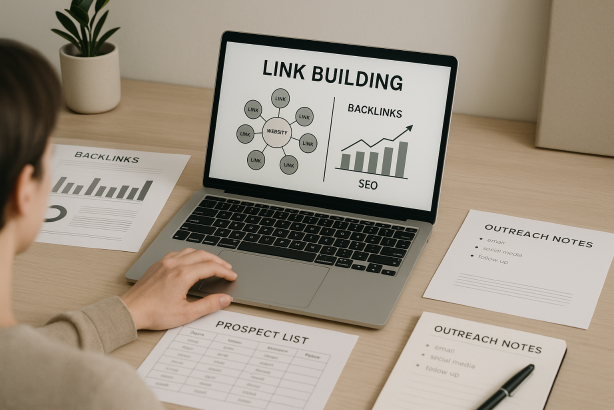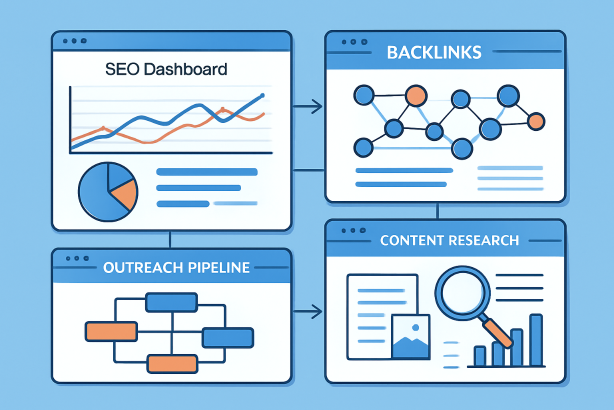

The market for AI SEO tools is moving quickly, and nowhere is that more visible than in link building. Teams that once spent hours sorting prospects, reviewing backlink profiles, grouping outreach targets, and drafting personalized emails can now move through those steps much faster. That shift is real. But speed is not the same as strategy.
For link builders, the current trend is not simply using more software. It is using AI SEO tools to reduce repetitive work while protecting the parts of the process that still depend on judgment: topical fit, editorial value, relationship quality, and risk control. The best teams are not chasing full automation. They are building tighter systems for prospecting, qualification, outreach support, and campaign review.
If you are evaluating this space right now, the key question is simple: where do these tools genuinely improve link building, and where do they introduce noise, shortcuts, or quality issues? This guide breaks down what matters now, how to use the trend to your advantage, and how to keep your backlink strategy commercially sharp.
Why AI SEO tools matter in link building right now
Link building has always had a workflow problem. There is usually no shortage of possible prospects, pages, or outreach angles. The real constraint is deciding which opportunities deserve attention first. That is why AI SEO tools are gaining traction inside backlink campaigns. They can help teams filter large data sets, organize messy inputs, and surface patterns faster than manual review alone.
In practical terms, that means faster shortlisting of relevant sites, quicker review of competitor backlinks, better topic grouping for digital PR ideas, and more efficient first drafts for outreach. Those gains matter because modern link building is less about volume and more about precision. A smaller set of well-qualified opportunities often outperforms a bloated outreach list filled with weak fits.
This trend also reflects a broader shift in SEO operations. Campaigns are becoming more integrated. Link building is no longer isolated from content planning, page targeting, keyword intent, and topical authority. The strongest workflows connect all of those pieces, which is exactly where better tooling can create leverage.
Where AI SEO tools help most in a link building workflow
Not every task benefits equally from automation or pattern detection. The smartest approach is to use these tools where scale and structure matter most, then keep human review at the final decision points.
1. Prospect discovery and segmentation
Prospecting is one of the clearest use cases. A strong system can gather site candidates, group them by topic, flag likely relevance, and separate high-potential prospects from low-value noise. This is especially useful when you are targeting multiple content hubs or working across several verticals at once.
Instead of building one massive unfiltered list, teams can segment prospects into more useful buckets:
- Editorial sites with clear topical alignment
- Resource pages that may support link insertion or inclusion
- Publishers suited for digital PR outreach
- Niche blogs with relationship potential
- Low-priority domains that may not justify time
That type of segmentation improves outreach quality because the message, value proposition, and landing page choice can match the prospect type.
2. Competitor backlink research
Competitor backlink research becomes much more useful when it moves beyond raw export files. The real value is not just seeing who links to a competing domain. It is understanding why those links exist, which content themes attract them, what patterns repeat, and which placements may be replicable.
AI SEO tools can speed up that review by clustering backlink sources, identifying recurring page formats, and helping teams isolate links that are actually relevant to their own positioning. This makes your analysis more strategic. You are not copying a competitor link profile. You are learning which content assets, angles, and site categories are most likely to earn traction in your market.
3. Outreach preparation
Outreach is often where teams are tempted to over-automate, and that is where mistakes happen. Still, there is a valuable middle ground. Good tools can help summarize a target site, identify likely outreach angles, pull page context, and prepare a draft that a human can refine.
That matters because strong outreach depends on relevance, not just personalization tokens. Before contacting anyone, you need a reason your message belongs in their inbox. Preparation support can help you get to that reason faster, as long as the final email is checked for accuracy, tone, and actual value.
4. Content angle development for digital PR outreach
Many link campaigns fail because they are asking for links without bringing a story, resource, or genuinely useful asset to the table. In digital PR, the challenge is often finding an angle that connects your expertise to what publishers may cover. This is another area where structured research can help.
You can use AI SEO tools to organize topical themes, compare related subject areas, and generate starting points for content concepts. That does not replace editorial thinking, but it can make brainstorms faster and more complete. For link building, that means fewer generic pitches and more campaigns tied to a publishable idea.
5. Anchor text and destination page planning
Link building quality is not only about getting links. It is also about where they point and how they fit within your broader SEO strategy. Tools can help map page targets, identify overlapping intent, and review anchor text patterns so campaigns support the right URLs without creating obvious imbalance.
This is especially useful for growing sites with many commercial and informational pages. A cleaner planning layer helps prevent situations where teams over-support one page, ignore another priority asset, or create an unnatural spread of anchors across campaigns.
A practical view of the best use cases
| Use case | What it improves | What still needs human review |
|---|---|---|
| Prospect discovery | Faster list building and topic grouping | True relevance, quality, and risk level |
| Backlink analysis | Pattern recognition across competitor profiles | Why a link was earned and whether it is worth pursuing |
| Outreach preparation | Research summaries and draft support | Tone, accuracy, and relationship value |
| Digital PR ideation | Theme mapping and angle generation | Editorial sharpness and newsworthiness |
| Anchor text strategy | Campaign consistency and destination planning | Final balance within the full backlink profile |
How to choose AI SEO tools for link building
The hottest trend in software usually creates two problems at once: too many options and too many overlapping promises. If you are evaluating AI SEO tools specifically for link building, avoid shopping by hype. Start with workflow friction instead.
Ask where your team is losing the most time today. Is it list cleaning? Prospect qualification? Backlink analysis? Outreach preparation? Reporting? Once that bottleneck is clear, choosing tools becomes easier because you are solving for a real process issue, not buying a broad platform that does everything moderately well.
Here are the evaluation criteria that matter most:
- Data usefulness: Does the tool help you reach a clearer decision, or does it just add another dashboard?
- Segmentation quality: Can it organize link opportunities in a way that reflects real outreach strategy?
- Workflow fit: Does it connect naturally with your existing link building tools and CRM habits?
- Editorial support: Can it improve research and messaging without making outreach sound generic?
- Control: Can your team easily review, edit, and override its suggestions?
- Scalability: Does it help you expand quality output, not just activity volume?
Notice what is missing from that list: flashy automation for its own sake. In link building, more output is only useful if it produces better conversations, better placements, and better alignment with your page goals.
The risks of using AI SEO tools the wrong way
There is a reason many link builders remain skeptical. The same systems that speed up research can also make it easier to produce low-quality campaigns at scale. When that happens, the tool is not the problem. The operating model is.
The most common issues include:
- Prospect lists that look relevant on the surface but have weak topical fit
- Outreach drafts that sound polished but say nothing specific
- Overuse of templates that create the same footprint across campaigns
- Page recommendations that do not match business priorities
- Anchor text patterns that become too repetitive
- Digital PR concepts that are broad but not actually publishable
These risks matter because link building remains a credibility exercise. Publishers, site owners, and editors can usually tell when a pitch was built for efficiency rather than relevance. The more saturated the inbox becomes, the more important judgment, restraint, and genuine value become.
That is why the current winning approach is not full automation. It is SEO workflow automation with clear quality gates.
A smarter workflow for modern link building teams
If you want to benefit from this trend without weakening quality, use a layered process.
Start with pages and goals
Before prospecting begins, define which pages actually need link support and why. Separate commercial targets, informational assets, and digital PR content. Clarify the role of each page inside your broader growth plan.
Use tools to narrow the field
Apply AI SEO tools to sort opportunities, group relevant sites, and surface patterns in competitor links. This is the stage where scale helps the most.
Apply manual qualification
Review the shortlist for topical fit, audience alignment, site quality, and realistic outreach angle. Remove anything that would force a weak pitch.
Draft with support, edit with intent
Use systems to prepare summaries or rough outreach drafts, but always rewrite the key message around the recipient, the asset, and the value exchange. Strong outreach automation should support personalization, not fake it.
Review anchor and destination logic
Make sure each campaign contributes to a sensible anchor text strategy and points to pages that deserve authority. Link acquisition should strengthen your site architecture, not create random wins.
Track learning, not just activity
Campaign review should answer questions such as which prospect types converted, which content angles opened conversations, and which site categories produced the strongest editorial fit. This creates a feedback loop that improves future targeting.
What the hot trend really means for link builders
The biggest shift is not that software can do more tasks. It is that link builders can now spend less time on mechanical work and more time on judgment. That creates an advantage for teams with strong strategy, because better tools amplify strong operators faster than they rescue weak campaigns.
In other words, AI SEO tools are not replacing link building fundamentals. They are raising the standard. If your offer is thin, your asset is weak, or your outreach lacks relevance, faster execution will only expose those issues sooner. But if your campaign is built around real value, clear page priorities, and disciplined qualification, the right stack can materially improve output.
Build a cleaner link building workflow with Rabbit SEO
If your team wants a more organized way to connect SEO priorities with real execution, Rabbit SEO is worth a closer look. A cleaner workflow helps you stay focused on the pages that matter, keep campaigns aligned with ranking goals, and reduce the operational mess that slows link building down.
Explore Rabbit SEO if you want a more practical path from research to action, without losing control of quality. In a crowded market, the best advantage is not doing everything faster. It is doing the right work in the right order.
Final thoughts on AI SEO tools
The current excitement around AI SEO tools is justified, but only when the tools are used with discipline. For link building, their best role is to accelerate research, improve segmentation, sharpen preparation, and support smarter decisions. Their worst role is to mass-produce low-value outreach.
If you treat this trend as a quality multiplier rather than a shortcut, you will be in a much stronger position. Use AI SEO tools to make your backlink process more focused, more consistent, and more commercially useful. Then let strategy, editorial judgment, and relationship-building do the part that still matters most.