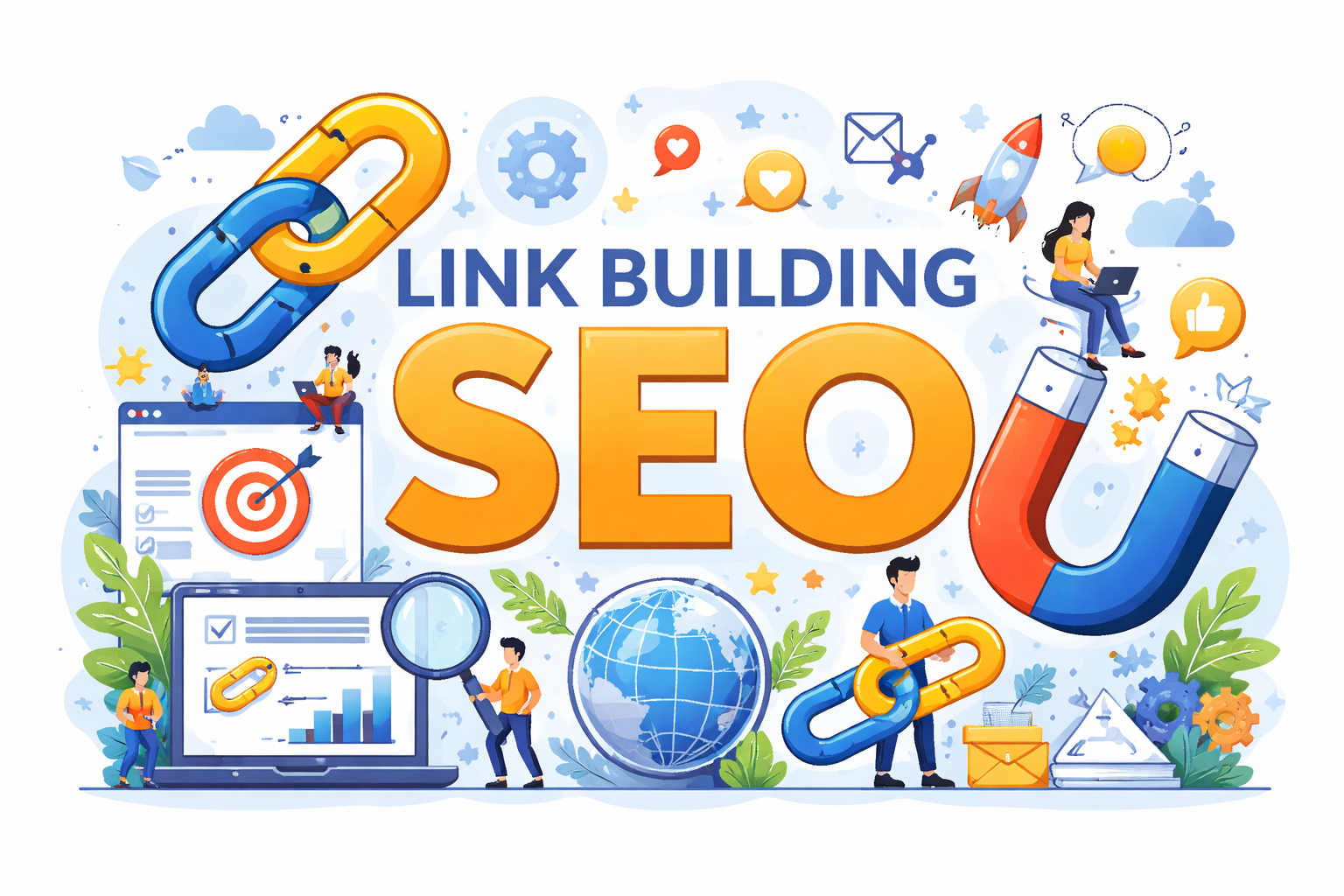

Link building tools can make an SEO team faster, more organized, and more selective, but only when the stack matches the kind of campaigns you actually run. Too many buyers compare feature grids in isolation and end up with a platform that is strong for backlink research, weak for outreach, or expensive once multiple teammates need access.
This buyer guide takes a case-study approach. Instead of judging tools in a vacuum, it looks at the recurring campaign situations that expose whether a purchase will hold up in real work: prospecting at scale, qualifying sites, finding contacts, managing outreach, monitoring earned links, and reporting progress internally. If you are evaluating link building tools for an agency, an in-house team, or a solo consultancy, the smartest decision is usually not finding one magical platform. It is choosing the right combination of tools for the bottleneck you need to remove first.
Why Buying Link Building Tools Is Harder Than It Looks
There is no single category called link building software in the same way there is a category for rank trackers or site crawlers. What buyers actually mean when they search for link building tools usually spans several jobs:
- Backlink analysis tools for competitor research and opportunity discovery
- SEO prospecting tools for finding relevant sites and pages
- Outreach software for email sequences, follow-ups, and contact management
- Backlink monitoring tools for checking whether earned links stay live
- Workflow tools for collaboration, approvals, and campaign reporting
That creates a common buying mistake: teams compare products that solve different problems and wonder why the reviews feel inconsistent. A technical SEO lead may love a platform for competitor backlink analysis while a digital PR manager dismisses it because the outreach workflow is too limited. Both can be right.
The second challenge is that link acquisition is deeply process-dependent. A company that earns links through editorial outreach has different needs from a team focused on broken link building, resource page outreach, link reclamation, or partner-based acquisition. The more precise you are about your workflow, the easier it becomes to buy well.
How We Evaluated Link Building Tools for This Buyer Guide
Because this article sits in a case studies category, it helps to look at tools through campaign reality rather than feature marketing. The criteria below are the ones that tend to matter once a team is actually running outreach and reporting on outcomes.
1. Research depth
Can the tool support reliable competitor backlink analysis, link gap discovery, and opportunity research? For many teams, this is where the shortlist starts.
2. Prospecting efficiency
Does it make link prospecting faster without flooding the list with irrelevant sites? Speed matters, but not if the output still needs hours of cleanup.
3. Contact discovery and verification
Finding relevant pages is only half the job. Buyers should test whether the stack helps them reach the right editor, marketer, or site owner with reasonable confidence.
4. Outreach workflow
The best outreach automation is not the one that sends the most email. It is the one that helps teams stay organized, avoid duplicate contact, personalize where needed, and keep follow-up disciplined.
5. Monitoring and reporting
Good backlink monitoring is especially important for agencies and in-house teams that need to demonstrate progress, spot lost links, and separate live placements from prospects still in progress.
6. Fit for team structure
A freelancer can tolerate more manual work than a five-person outreach team. An enterprise team may need permissions, integration, and approval workflows that a solo consultant will never use.
One more note: product pricing, limits, and features change frequently. Treat this guide as a buying framework, not a permanent price sheet.
What the Best Link Building Tools Need to Do in Real Campaigns
In real campaigns, tools rarely fail because they lack a flashy feature. They fail because they create friction in a critical step. Here are the jobs that matter most.
Prospect the right sites, not just more sites
If your team spends hours filtering low-relevance domains, the issue is not list size. It is prospect quality. Strong SEO prospecting tools should help you narrow by topical fit, page type, link profile context, and editorial standards.
Show why a target matters
Research tools should help answer practical questions fast: Does this site link to competitors? Has it covered the topic before? Is there an obvious angle for outreach? Does the page even have external links?
Keep outreach organized over time
Many link opportunities die in the handoff between research and outreach. A buyer should ask whether the tool stores contact history, status, notes, and reply context well enough to protect team memory.
Support quality control
Not every link is worth building. Teams need a way to review prospects before sending outreach and to monitor earned links after publication.
Link Building Tools by Job to Be Done
The market is easiest to understand when you group tools by their primary role. Most mature teams combine at least one research platform with one outreach platform and one lightweight monitoring or workflow layer.
| Tool | Best for | Key strengths | Watch-outs |
|---|---|---|---|
| Ahrefs | Backlink research and prospect discovery | Useful for backlink analysis, link intersect research, content discovery, and competitor review | Not a full outreach CRM; teams often pair it with separate outreach software |
| Semrush | All-in-one SEO teams | Combines backlink research with broader SEO visibility, making it practical for teams that want one core suite | Specialist outreach and relationship management may still require another tool |
| Majestic | Link-focused analysts | Built around link intelligence and useful for teams that want another perspective on a site’s backlink profile | Narrower workflow coverage than a broader SEO suite |
| BuzzStream | Relationship-led outreach | Strong for contact management, outreach history, and keeping teams organized across campaigns | Depends on external research sources for deep prospect discovery |
| Pitchbox | Agencies and high-volume outreach teams | Designed for scalable outreach workflows, collaboration, and campaign management | Requires process discipline and may feel heavy for smaller teams |
| Respona | Teams that want prospecting and outreach closer together | Combines prospecting workflows with outreach management in one environment | Still needs careful review of prospect quality and process fit |
| Hunter | Contact finding and verification | Useful for identifying and checking email addresses during outreach prep | Not a full link building system or prospect qualification platform |
| Screaming Frog SEO Spider | Technical qualification and opportunity discovery | Helpful for crawling sites, reviewing page structure, and finding broken or relevant resource opportunities | Technical rather than outreach-focused; best used alongside other tools |
No table can choose for you, but it can narrow the field. For most buyers, the practical question is not which tool is best overall. It is which one best solves the stage of the process that currently slows your campaigns down.
Case-Study Lens: Which Link Building Tools Fit Common Campaign Scenarios?
This is where buying decisions become clearer. The same tool can feel essential in one workflow and unnecessary in another.
Scenario 1: Competitor gap analysis for commercial pages
If the brief is to build authority to product, service, or category pages, your starting point is usually competitor backlink analysis. You need to know which sites already link to competing pages, what type of pages are attracting links, and whether the gap is editorial, partnership-based, or resource-driven.
Best fit: Ahrefs, Semrush, or Majestic as the research layer. Outreach software is secondary at this stage. If your team cannot identify strong prospects, no amount of email workflow will save the campaign.
Scenario 2: Resource page outreach or broken link building
This workflow rewards teams that can find relevant pages quickly, qualify whether the page is maintained, and identify the right contact without excessive manual work. Technical crawling can be surprisingly valuable here.
Best fit: A research tool plus Screaming Frog for qualification and Hunter for contact discovery. If outreach volume is moderate, a lighter CRM may be enough. If the campaign spans many markets or clients, BuzzStream or Pitchbox becomes more attractive.
Scenario 3: Digital PR-style promotion of linkable assets
When the campaign centers on a study, data page, calculator, or highly useful resource, the operational challenge shifts from research depth to list management, segmentation, follow-up, and team coordination. This is where many buyers discover that pure backlink analysis tools are not enough.
Best fit: BuzzStream, Pitchbox, or Respona for outreach management, paired with one core research platform for list development and qualification.
Scenario 4: Link reclamation and brand mention follow-up
Some of the highest-intent opportunities come from places that already know your brand, cited your data without linking, or previously linked and then removed the mention. The key need here is monitoring and fast action rather than broad-scale prospecting.
Best fit: A suite with solid backlink tracking plus a simple outreach workflow. You may not need a heavy platform if the list size is small and the opportunities are already warm.
Scenario 5: Agency delivery across multiple clients
Agency teams do not just need results; they need consistency. That means campaign statuses, handoffs, notes, approval processes, and reporting all matter more. A tool that feels expensive for a freelancer can be efficient for an agency if it reduces process friction across many accounts.
Best fit: A robust research platform paired with strong outreach software, especially if multiple people touch prospecting, copy, approvals, and client updates.
Choosing Link Building Tools for Your Team Size and Maturity
Your stage of growth should influence your purchase as much as your campaign type.
| Team type | Recommended stack approach | Why it works |
|---|---|---|
| Solo consultant | One SEO suite plus a contact finder and a lightweight outreach workflow | Keeps costs manageable while covering research, basic prospecting, and execution |
| Small in-house team | One research platform, one outreach CRM, and one crawler or qualifier | Creates separation between research and outreach without overcomplicating operations |
| Agency | Dedicated research tool, dedicated outreach platform, contact verification, and reporting process | Supports scale, delegation, and cleaner campaign management across clients |
| Enterprise or PR-led team | Broad SEO suite plus robust outreach management and stronger governance | Helps with cross-functional collaboration, stakeholder visibility, and larger approval chains |
A useful rule of thumb: buy the simplest stack that supports your next stage, not the most advanced stack you might need in two years. Tool sprawl is a quiet budget drain in SEO.
Common Mistakes Buyers Make With Link Building Tools
- Buying for volume before relevance. Bigger prospect lists do not fix weak targeting.
- Overvaluing automation. Poorly targeted outreach sent faster is still poor outreach.
- Ignoring workflow handoffs. Research, writing, approvals, and reporting all need a clear home.
- Assuming one platform will do everything well. Most teams benefit from a stack, not a single product.
- Skipping a pilot process. Test a small campaign before committing team-wide.
- Choosing based only on price. A cheaper tool that creates hours of manual cleanup can be more expensive in practice.
Questions to Ask Before You Buy Link Building Tools
Use these questions to pressure-test a shortlist:
- What exact campaign types will this tool support in the next six months?
- Is our biggest bottleneck prospect discovery, qualification, contact finding, outreach management, or monitoring?
- Who will use the tool daily, and how many seats do we really need?
- Can the team export, organize, and report on data without building a workaround every week?
- How easily can we prevent duplicate outreach and preserve contact history?
- Do we need a specialist tool, or would an all-in-one suite be enough at our current scale?
- What would make this purchase a failure after 90 days?
If you cannot answer those questions, the problem is probably not the shortlist. It is that the buying brief is still too vague.
A Practical Buying Recommendation
For most teams, the strongest starting point is a two-layer stack:
- Layer one: a research platform for backlink analysis, opportunity discovery, and competitor review
- Layer two: an outreach or relationship tool for campaign execution and follow-up
Add contact verification if your outreach volume justifies it. Add technical crawling if your process includes broken links, resource pages, or deeper site qualification. Add heavier workflow software only when multiple stakeholders create enough complexity to warrant it.
This approach keeps the purchase grounded in real campaign needs instead of turning the tool search into a hunt for an all-in-one product that looks impressive in a demo but solves the wrong problem in production.
Need help turning a tool stack into a repeatable link acquisition system? Rabbit SEO works with brands and teams that want practical strategy, cleaner prospecting, and outreach processes that produce links without unnecessary complexity. If you are weighing platforms or rebuilding your current workflow, Rabbit SEO can help you choose and use the right stack for your goals.
Final Thoughts on Link Building Tools
The best link building tools are not the ones with the longest feature list. They are the ones that remove friction from the exact kind of campaign you run most often. Start with your workflow, identify the bottleneck, and buy the smallest stack that solves it well. If you do that, your investment in link building tools will support better research, cleaner outreach, stronger team coordination, and more dependable SEO execution over time.