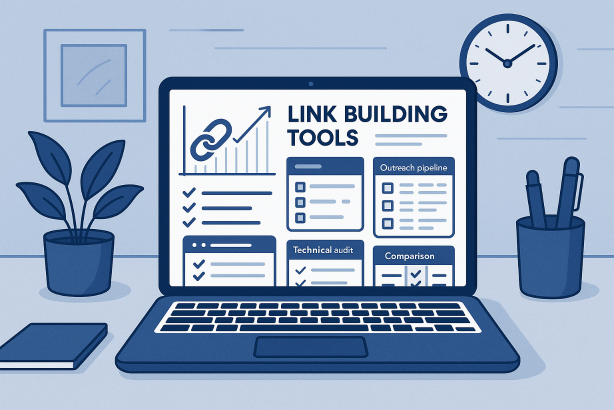

Buying link building tools sounds simple until you start comparing platforms. One promises a huge backlink database. Another focuses on outreach workflows. A third combines prospecting, contact discovery, and reporting. The real challenge is not finding software. It is choosing a stack that matches how your team researches opportunities, validates pages, runs outreach, and protects link equity after a link goes live.
That is why this buyer guide takes a technical SEO angle. Strong links can help rankings, but only when they point to pages that are crawlable, indexable, internally supported, and strategically worth promoting. If your target pages redirect, carry the wrong canonical, or struggle with thin site architecture, even the best outreach process will underperform.
In other words, the best link building tools do more than help you send emails. They help you make better decisions about where links should go, which prospects are worth pursuing, and how to monitor the value of links you have already earned.
What link building tools should actually do for you
Good link building tools should reduce wasted effort. They should not just generate more names for a spreadsheet. A strong stack helps your team move from raw data to qualified action.
- Find relevant prospects based on topic fit, content type, publication quality, and the page you want to promote.
- Support competitor backlink analysis so you can see which pages earn links in your niche and why.
- Speed up qualification with useful filters for traffic trends, referring domains, topical relevance, and page-level context.
- Manage outreach with contact records, follow-ups, and campaign visibility.
- Monitor acquired links so you can catch removals, nofollow changes, redirects, or broken target pages.
- Connect with technical SEO work by helping you validate status codes, canonicals, indexability, and internal linking before and after outreach.
If a tool does not clearly improve one of those jobs, it is probably adding complexity rather than value.
The main types of link building tools in a modern SEO stack
Most teams do not buy one product and solve everything. They combine a few different tool types. Understanding those categories makes it easier to avoid overlap and spend where it matters most.
| Tool category | Main job | Typical examples | Best for | What to watch |
|---|---|---|---|---|
| Backlink intelligence | Research competitors, referring domains, anchor text, and link gaps | Ahrefs, Semrush, Majestic | Strategy, research, prioritization | Large databases do not automatically mean better prospect quality |
| SEO prospecting tools | Find relevant sites and pages for outreach | Search operators, content discovery tools, in-platform prospecting features | Campaign ideation and list building | Metric-heavy lists can hide weak editorial fit |
| Outreach software | Track contacts, campaigns, email sequences, and replies | BuzzStream, Pitchbox, Respona | Agencies and repeatable outreach processes | Workflow software cannot fix poor targeting |
| Contact discovery | Find and verify email addresses | Hunter and similar tools | Teams scaling manual outreach | Accuracy varies and verification still matters |
| Backlink monitoring and technical validation | Check whether links stay live and whether target pages remain technically sound | Google Search Console, Screaming Frog, link monitoring features | Protecting link equity over time | Often neglected until value is already lost |
For many businesses, backlink analysis tools are the starting point. They help you understand who links to competitors, which pages attract editorial references, and what content formats tend to earn attention. That said, research alone rarely creates results. Once you move from analysis to acquisition, outreach management becomes the operational bottleneck.
There is also a common gap between link building and technical SEO. Teams spend heavily on prospecting and outreach, yet never verify whether the destination page returns a clean 200 status, points to itself canonically, or sits too deep in the site structure to fully benefit from fresh authority. A serious buyer should treat technical validation as part of the link building stack, not an optional extra.
How to evaluate link building tools before you buy
The right buying criteria depend on campaign style, team size, and budget. Still, a few evaluation principles apply almost everywhere.
1. Start with the job, not the brand
Before looking at demos, define the work you need done. Are you mainly researching competitor link profiles? Building media and resource page lists? Managing outreach at scale? Monitoring links already won? The wrong purchase often happens when teams buy a popular platform first and only later realize it does not solve their actual bottleneck.
A simple way to frame this is to list your recurring tasks each month and assign them to tool categories. If most of your time disappears into qualifying prospects and organizing follow-ups, outreach management may deserve more budget than another broad research platform.
2. Check data quality in the context of your niche
Backlink indexes and prospecting databases are not equally useful in every market. What matters is not just how much data a vendor has, but whether the data is fresh, relevant, and easy to segment for your vertical.
When testing backlink analysis tools, look at:
- Whether important competitors and publications in your niche are well covered
- How easily you can isolate page-level opportunities rather than just domain-level lists
- Whether anchor text, link type, and referring page context are easy to inspect
- How simple it is to export clean data for qualification
This is especially important for B2B, ecommerce, and local campaigns where a prospect can look strong on paper but still be a weak editorial fit.
3. Evaluate technical SEO compatibility
This is where many buyer guides stay too shallow. Link building tools should support decisions that make sense for rankings, not just for outreach volume. At minimum, your process should allow you to verify:
- That your target page returns the correct status code
- That the canonical points where it should
- That the page is indexable and not blocked by a directive or configuration issue
- That the page has enough internal links to distribute authority effectively
- That you are not building links to a URL likely to be redirected later
If a tool cannot perform these checks directly, that is fine, but it should fit cleanly with a technical audit workflow. In practice, many teams pair link prospecting with Screaming Frog crawls and Google Search Console validation to make sure outreach points to pages that can actually win.
4. Look for workflow efficiency, not just features
A long feature list can hide a clumsy interface. During trials, pay attention to how quickly your team can move from discovery to qualification to contact management. Good link prospecting and outreach management should feel connected. You should not need endless exports and manual cleanup just to progress a campaign.
Useful workflow questions include:
- Can you tag prospects by campaign, intent, topic, or target page?
- Can multiple team members collaborate without duplicating work?
- Are notes, status updates, and contact history easy to access?
- Can you suppress unsuitable domains and avoid re-pitching old contacts?
- Can reporting show meaningful progress beyond sent emails?
These details matter more than shiny dashboards because link building success is usually operational.
5. Understand the pricing model before you commit
Pricing in this category can become expensive fast. Some tools charge by seats. Others charge by outreach volume, tracked contacts, reports, or data credits. A platform that looks affordable for one user may become expensive once you involve SEO, digital PR, and account management.
Ask what happens when you scale. Can you add users without a sharp price jump? Are core functions locked behind higher plans? Will you still need separate contact discovery or backlink monitoring subscriptions? The total stack cost matters more than the entry plan.
6. Prioritize reporting you can act on
Better reporting is not just prettier reporting. The best link building tools help you answer practical questions: Which target pages are attracting interest? Which prospects keep replying? Which live links point to pages that later changed status or canonical? Which campaigns created durable editorial links versus one-off mentions?
If reporting cannot support those decisions, you may be buying visibility without control.
All-in-one versus specialist link building tools
There is no universal winner here. An all-in-one platform can be attractive if your team wants fewer subscriptions and a single workflow. This is often a good fit for smaller in-house teams that need acceptable capability across research, prospecting, and reporting without building a complicated stack.
Specialist tools tend to make more sense when link acquisition is a mature process. Agencies, digital PR teams, and in-house teams with defined roles often benefit from separate backlink analysis tools, outreach software, and technical validation tools. That approach can be more powerful, but it also increases training, integration work, and total cost.
A useful rule is simple: buy breadth when simplicity matters most, and buy depth when process maturity justifies it.
A practical buying framework for link building tools
If you want a cleaner shortlisting process, use this sequence.
- Step 1: Define your campaign model. Are you running guest posting, digital PR, resource link building, broken link building, partner outreach, or content-led campaigns? Different models need different tools.
- Step 2: Identify your bottleneck. Research, qualification, contact discovery, outreach management, or backlink monitoring.
- Step 3: Build a shortlist by job category. Compare two or three realistic options instead of every platform in the market.
- Step 4: Run a live trial. Test on a real campaign, not a generic demo. Use your actual competitors, target pages, and outreach workflow.
- Step 5: Validate technical fit. Confirm that your chosen process includes page-level checks for status codes, canonicals, indexability, and link destination stability.
- Step 6: Calculate the full stack cost. Include training time, seats, add-ons, and any separate tools still required.
For smaller teams, a common path is one strong research platform plus a lightweight outreach system and a technical audit workflow. For larger teams, the stack may become more specialized, with separate platforms for backlink intelligence, outreach management, and monitoring.
Common mistakes buyers make
- Buying on database size alone. Bigger data can still produce weak prospects if relevance and qualification are poor.
- Ignoring technical SEO. Links to weak destination URLs do not create the value buyers expect.
- Paying for scale before process. Outreach software is most useful once messaging, targeting, and tracking are already disciplined.
- Overlapping subscriptions. Many teams pay twice for similar research capabilities and still lack monitoring.
- Judging success by volume metrics. More prospects and more emails do not automatically mean better links.
- Skipping trials. A live test reveals workflow friction much faster than a sales demo.
The smartest buyers do not ask which platform is best in the abstract. They ask which tool removes the most friction from their actual process while protecting the technical value of every link they earn.
Build a link acquisition process that supports rankings
If you want your off-page work to drive stronger SEO outcomes, your stack should connect link acquisition with page readiness, site structure, and ongoing technical checks. Explore Rabbit SEO if you want a cleaner way to keep technical SEO priorities visible while you plan content promotion and link campaigns. Better alignment makes every investment in link building tools easier to justify.
Final verdict on link building tools
The best link building tools are not necessarily the most expensive or the most feature-heavy. They are the ones that help your team find relevant opportunities, qualify them efficiently, run disciplined outreach, and protect link equity with solid technical SEO practices. Buy for workflow, buy for fit, and buy for the pages that deserve authority most. When you approach link building tools that way, your software stack becomes a growth asset rather than another line item.