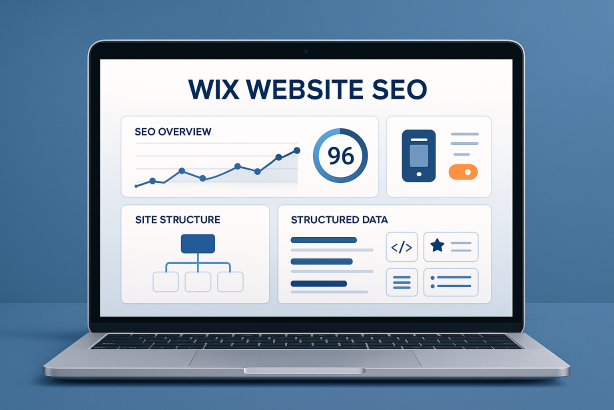

Wix Website SEO in 2026 is less about whether the platform can rank and more about how well the site is configured, structured, and maintained. Wix now covers many core SEO requirements out of the box, but that does not remove the need for technical discipline. Search visibility still depends on crawlability, index control, internal linking, page performance, structured data, and the quality of the site architecture behind the design.
That is why the strongest Wix sites treat SEO as a technical system, not a plugin or a one-time setup. If your pages are slow, orphaned, duplicated, poorly linked, or sending mixed canonical signals, rankings will stall no matter how polished the design looks. This guide covers the best practices that matter most for Wix Website SEO in 2026, with a focus on technical foundations that support lasting organic growth.
Why Wix Website SEO needs a technical-first approach in 2026
Wix has matured into a capable platform for businesses, publishers, and ecommerce brands, but search engines still evaluate the same fundamentals they evaluate on any CMS. They need to understand your pages, discover them efficiently, and trust that each URL serves a distinct purpose. A visually strong site is not enough if the crawl path is messy or important pages are buried behind weak navigation.
A technical-first approach to Wix Website SEO helps you solve the issues that usually limit performance:
- Indexing friction: pages that exist but are not being discovered or indexed reliably.
- Duplicate intent: multiple pages competing for the same topic, service, or location.
- Poor performance: heavy media, excessive apps, and layout choices that slow mobile rendering.
- Weak internal linking: valuable pages that lack enough contextual links to build authority.
- Unclear structured signals: pages that could win better search presentation but lack proper markup.
In short, the platform is only the starting point. The real advantage comes from how you use it.
Wix Website SEO foundations to get right first
Use one clean, canonical site version
Start with the basics: a connected custom domain, HTTPS enabled, and a single preferred version of your site. You do not want search engines splitting signals between variations of the same URL. Every important page should resolve consistently, and retired URLs should redirect cleanly to the most relevant replacement page rather than being left to produce dead ends.
On Wix, this means reviewing your live URL structure, confirming that canonical behavior is consistent, and making sure old campaign, test, or duplicate pages are not still accessible. Canonical clarity remains one of the simplest and most important technical wins.
Build a logical site architecture
Wix Website SEO performs best when the site structure is shallow, intuitive, and aligned with search intent. Important pages should be reachable within a few clicks from the homepage or key hub pages. If a service page, product category, or high-value article is buried too deeply, both users and crawlers are less likely to prioritize it.
Organize the site around clear topic clusters. For example, your top-level navigation might link to main service areas, while subpages cover supporting use cases, industries, locations, or FAQs. Keep each page focused on a distinct purpose, and avoid creating multiple thin pages that target slight keyword variations without offering unique value.
Review crawl and index settings page by page
Not every page on a Wix site should be indexed. Utility pages, duplicate filtered views, internal search results, and thank-you pages often create clutter in the index. A better approach is to decide intentionally which pages deserve organic visibility and which should remain crawlable but not indexable, or blocked from priority navigation altogether.
This is where careful use of Wix SEO settings matters. Review page-level metadata, indexing controls, and canonical configuration for all templates that matter most. Technical SEO for Wix is strongest when the index only contains pages worth ranking.
Connect search data from day one
Before scaling content, connect Google Search Console and monitor what search engines actually index. Submit the sitemap, watch coverage reports, and investigate pages that are discovered but not indexed, excluded unexpectedly, or receiving impressions for the wrong queries. Search Console will often reveal structural problems long before traffic drops make them obvious.
On-page signals that strengthen technical SEO for Wix
While this is a technical SEO topic, on-page elements still play a structural role. They help search engines understand the purpose of each page and reduce ambiguity across the site.
Write unique title tags and meta descriptions
Every important page needs a specific title tag that reflects its main topic and intent. On Wix sites, templated metadata can save time, but it should never result in duplicated titles across service, collection, or blog pages. Keep titles clear, direct, and useful rather than overloaded with variations of the same keyword.
Meta descriptions do not directly control rankings, but they support click-through potential and help reinforce topical relevance. The goal is not to stuff keywords, but to describe the page accurately enough that users know what to expect before they click.
Keep heading structure clean
Use one clear H1 per page, followed by logical H2 and H3 sections. Wix designs sometimes encourage layout decisions that look good visually but create inconsistent heading hierarchies. Review templates to ensure headings are real headings, not just styled text boxes. This is a small detail with outsized technical value for page clarity.
Strengthen internal linking
Internal links are one of the most overlooked parts of Wix Website SEO. They help distribute authority, guide crawlers to deeper pages, and establish topical relationships across the site. Link from high-authority pages to strategically important pages using natural anchor text. Blog articles should point to commercial pages where relevant, service pages should link to supporting resources, and category pages should reinforce priority child pages.
Just as important, audit for orphan pages. If a page only exists in the XML sitemap but has no meaningful internal links, search engines receive a weaker signal that it matters.
Core Web Vitals and Wix site speed in 2026
Performance remains a defining factor for both user experience and SEO. Wix handles hosting infrastructure, but the actual experience still depends heavily on what you place on the page. Heavy imagery, third-party apps, video backgrounds, layered animations, and oversized above-the-fold sections can all reduce performance, especially on mobile devices.
To improve Wix site speed and support Core Web Vitals for Wix, focus on the elements you can control:
- Use appropriately sized images: upload high-quality assets, but avoid oversized files when smaller versions would display identically.
- Limit unnecessary apps and embeds: each extra widget can add scripts, requests, and rendering overhead.
- Simplify the first screen: the top of the page should load quickly and communicate the page purpose immediately.
- Be selective with fonts: too many weights and styles can slow rendering and create visual instability.
- Control layout shifts: reserve space for media and avoid design elements that jump during load.
- Prioritize mobile testing: what feels fast on desktop may perform poorly on real mobile connections.
For 2026, do not treat performance as a separate optimization pass after launch. It should shape design decisions from the start. Better pages are often simpler pages.
Use structured data to improve clarity and search appearance
Wix structured data can help search engines understand page type, brand context, and content relationships more clearly. Depending on the site, relevant schema types may include Organization, WebSite, BreadcrumbList, Article, Product, or FAQ. The key is accuracy. Mark up only what is genuinely present on the page and visible to users.
Best practice is to review schema across important templates rather than assuming defaults are enough. Pay particular attention to these points:
- Do not apply the same markup blindly to every page if the content type differs.
- Keep schema aligned with visible on-page content.
- Avoid contradictory or duplicated structured data blocks.
- Use breadcrumbs where architecture benefits from clearer hierarchy signals.
Structured data does not guarantee enhanced search results, but it does make your site easier to interpret, which is a strong technical advantage.
Image SEO and media handling on Wix
Media is often where aesthetically strong Wix sites create technical problems for themselves. Images should support visibility, not slow it down. Before uploading, use descriptive file names that reflect the topic of the page. Add concise, useful alt text that explains the image in context rather than forcing keywords into every field.
Also avoid relying on images to communicate critical text. If important messaging only exists inside a hero banner graphic, search engines and assistive technologies get a weaker signal. Keep primary copy as real HTML text whenever possible.
For ecommerce and portfolio pages, consistent media handling becomes even more important. Reusable naming conventions, optimized dimensions, and clear category organization can improve both search visibility and site maintenance over time.
Manage multilingual, duplicate, and canonical issues carefully
If your Wix site targets multiple languages or regions, technical precision matters even more. Each version should serve a distinct audience, have clear internal linking, and avoid accidental duplication. If you use multilingual functionality, make sure language targeting is consistent and that equivalent pages map correctly across versions.
Duplicate content problems on Wix usually come from site growth rather than the platform itself. Common causes include near-identical service pages, repeated city pages with minimal differentiation, duplicate collection pages, or archived content that still competes with newer versions. The solution is editorial and technical: consolidate weak pages, redirect when appropriate, and keep one strong URL per intent.
A practical Wix SEO checklist for 2026
| Area | Best practice | Why it matters |
|---|---|---|
| Indexability | Allow only valuable pages into the index | Reduces crawl waste and improves overall site quality signals |
| URLs | Use clean, readable slugs and redirect retired pages | Prevents fragmentation and preserves relevance |
| Metadata | Create unique titles, descriptions, and H1s | Clarifies page intent and avoids duplication |
| Internal links | Link strategically from hubs, blogs, and high-authority pages | Improves discovery and strengthens important URLs |
| Performance | Optimize media, reduce heavy scripts, and test mobile | Supports better UX and stronger Core Web Vitals |
| Structured data | Add accurate schema to key templates | Helps search engines interpret your content |
| Monitoring | Review Search Console regularly | Catches Wix indexing issues and technical regressions early |
Common Wix SEO mistakes to avoid
- Leaving default page titles in place after launching a template-based site.
- Creating too many similar pages that target the same service or keyword without unique value.
- Overloading pages with visual effects that hurt mobile performance.
- Publishing content without internal links back to commercial or cornerstone pages.
- Ignoring redirect hygiene when deleting or merging pages.
- Letting low-value tag, archive, or utility pages compete for indexation with more important URLs.
Turn Wix Website SEO into a repeatable growth system
The biggest gains in Wix Website SEO rarely come from one dramatic change. They come from a repeatable process: cleaner architecture, better indexing decisions, smarter internal linking, stronger performance, and ongoing monitoring. When those pieces work together, the site becomes easier to crawl, easier to understand, and easier to rank.
If you want a clearer path to prioritizing technical fixes, explore Rabbit SEO. It can help you surface issues, organize your SEO workflow, and keep your Wix site aligned with modern search best practices as you grow.
Final thoughts on Wix Website SEO for 2026
Wix Website SEO in 2026 is about execution, not platform limitations. Wix can support serious organic performance, but only if the site is built with the same technical care you would expect from any mature CMS. Focus on clean indexation, strong site architecture, internal linking, Core Web Vitals, and accurate structured data, and your Wix site will be positioned for stronger visibility, better usability, and more sustainable search growth.