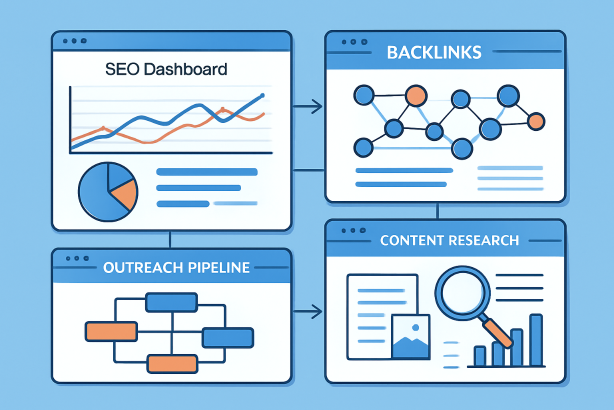

Buying technical SEO tools is easy. Buying the right ones is harder.
Most teams shop for features, dashboards, and pricing tiers. The better approach is to shop for outcomes. If your site cannot be crawled efficiently, indexed correctly, and linked internally with intent, your link building efforts will underperform no matter how strong your outreach is. Backlinks can only pass their full value when the destination pages are technically sound.
That is why this buyer guide looks at technical SEO tools through a practical commercial lens. Not as a checklist of shiny capabilities, but as systems that help you protect link equity, uncover pages worth promoting, reduce waste in your architecture, and make every new backlink work harder.
If you are comparing platforms for an in-house team, agency, ecommerce brand, publisher, or growth-stage business, this guide will help you separate must-have capabilities from nice-to-have extras.
Why technical SEO tools matter in a link building category
Link building and technical SEO are often treated as separate workstreams. In reality, they depend on each other.
When you earn links to a page that returns the wrong status code, is buried too deep in the site, competes with a duplicate URL, or funnels authority through poor internal linking, you lose value. A strong backlink profile cannot fully compensate for technical friction. The role of technical SEO tools is to show where that friction exists before it becomes expensive.
From a buyer’s perspective, that means the best tools are not just website health checkers. They should help you answer commercial questions such as:
- Which pages are most worthy of outreach because they can actually rank and convert?
- Where is link equity being diluted through redirects, orphan pages, or weak internal linking?
- Which technical fixes should be prioritized before investing more in digital PR or backlink acquisition?
- How quickly can your team turn audit findings into action?
If a platform cannot help your team connect technical issues to search visibility and link value, it may be a capable crawler but not a strong buying decision.
What good technical SEO tools should help you accomplish
Before comparing vendors, define the jobs you need the tool to do. The best buying decisions usually come from matching tools to workflows, not from chasing the longest feature list.
1. Find crawl and indexation problems early
A solid site crawler should show you broken links, redirect chains, server errors, canonical conflicts, noindex tags, thin pages, duplicate patterns, and blocked resources. These are not just technical concerns. They affect whether search engines can discover, evaluate, and consolidate authority across your site.
For link building teams, this matters because you do not want to send outreach to a page that is unlikely to perform once links are secured.
2. Protect link equity
Every link you earn has a cost, whether that cost is budget, time, content production, or relationship building. Technical SEO tools should help you protect that investment by surfacing:
- Redirect loops and multi-hop redirects
- Broken destination URLs
- Canonical mismatches
- HTTP to HTTPS inconsistencies
- Parameter-based duplication
These issues can quietly weaken the impact of your backlink profile.
3. Improve internal link distribution
External backlinks usually enter a site through a relatively small number of pages. What happens next depends on your internal architecture. Strong internal linking tools reveal which pages receive authority, which pages are isolated, and where contextual links can strengthen important commercial URLs.
This is especially valuable in the Link Building category because a good internal linking strategy helps turn a handful of earned links into broader ranking gains across supporting pages.
4. Prioritize pages worth promoting
Not every page deserves active outreach. Technical SEO tools should make it easier to identify pages with clean indexation, healthy crawl access, solid internal support, and low technical risk. Those are often better link acquisition targets than pages with unresolved rendering, duplication, or structural issues.
5. Support recurring monitoring, not just one-off audits
A tool that creates a useful initial report but fails to support ongoing monitoring often becomes shelfware. Look for systems that can track changes over time, notify teams when critical issues appear, and make recurring audits routine rather than painful.
Core categories of technical SEO tools to compare
Most buyers do not need a single magical platform. They need coverage across a few key use cases. The smartest purchasing process starts by understanding which category solves which problem.
| Tool category | What it helps you see | Why it matters for link building |
|---|---|---|
| Website crawlers | Status codes, redirects, canonicals, duplicate content, crawl depth | Ensures linked pages are technically sound and authority is not wasted |
| Site audit platforms | Broad issue reporting, prioritization, scheduled checks | Helps teams spot blockers before launching campaigns |
| Indexation monitoring tools | Coverage gaps, excluded URLs, indexing anomalies | Confirms whether pages you promote can actually appear in search |
| Internal linking tools | Orphan pages, link distribution, anchor opportunities | Improves how earned authority flows through the site |
| Backlink analysis tools | Referring domains, target pages, lost links, competitor link patterns | Connects technical health with off-page opportunity |
| Performance and rendering diagnostics | JavaScript issues, resource loading, page experience signals | Reduces the risk of promoting pages that are difficult to render or use |
Some platforms span several categories. Others do one job very well. Your buying decision depends on whether you want depth in one area or acceptable coverage across many.
How to evaluate technical SEO tools as a buyer
Once you know your use case, compare products against the criteria that actually affect execution.
Crawl depth and flexibility
A serious tool should let you customize crawls by subfolder, subdomain, URL patterns, directives, and page types. This matters if you manage large sites or want to isolate specific sections such as blog content, category pages, or landing pages used in link campaigns.
Ask whether the crawler can:
- Handle large URL volumes without becoming unusable
- Segment findings by template or directory
- Extract structured data or custom elements if needed
- Compare crawl data over time
JavaScript rendering support
Many sites rely on JavaScript frameworks, which means a basic HTML crawl may miss critical issues. If your important content, navigation, or linking elements depend on rendered output, your tool needs to reflect that reality.
This is not an advanced edge case. It is often the difference between thinking a page is fine and discovering that search engines are seeing something much weaker than users do.
Internal linking analysis
If you work in link building, internal linking analysis should not be optional. Look for visibility into:
- Orphan pages
- Pages with too few internal links
- Overlinked low-priority URLs
- Anchor text patterns
- Click depth and path efficiency
This is where many SEO audit tools fall short. They identify problems, but do not help you understand how authority moves through the site.
Redirect and status code reporting
For buyers evaluating technical SEO tools, redirect reporting is one of the clearest separators between lightweight and serious platforms. You need to understand where 301 chains, temporary redirects, broken links, soft errors, and destination mismatches are weakening performance.
Strong reporting here directly supports link reclamation and protects the value of both old and newly acquired backlinks.
Canonical, duplicate, and parameter handling
Technical clutter often hides in duplicate content and URL variants. The right tool should help you identify duplicate templates, conflicting canonicals, faceted navigation issues, and parameter-generated waste. These issues can distort reporting and split signals across multiple URLs.
If your site is ecommerce, publishing-heavy, or filter-driven, this evaluation point deserves extra weight.
Workflow and collaboration
Buying software for a single SEO specialist is different from buying for a team. Consider how findings are shared, filtered, assigned, and exported. Can your content, development, and outreach teams all use the outputs? Can you turn a technical issue into a clearly scoped ticket?
A tool that surfaces brilliant insights but creates friction in execution is usually overpriced, even if the subscription cost looks reasonable.
Backlink context
Because this guide sits in a Link Building category, give extra credit to platforms that let you connect technical findings with backlink analysis. Ideally, you should be able to see which linked pages have technical weaknesses, which lost links point to outdated URLs, and which sections of the site deserve stronger technical support before more outreach begins.
Pricing realism
Pricing should be measured against usage, not the headline monthly number. Ask:
- How many projects, users, or crawled URLs are included?
- Are essential features locked behind higher tiers?
- Will your needs outgrow the plan quickly?
- Does the cost replace several smaller tools or simply add another layer?
The cheapest option often becomes expensive when it cannot scale with your site or team.
Questions to ask before you buy technical SEO tools
A strong buying process is usually driven by a few clear questions:
- What specific technical problems are slowing down our organic growth or reducing the impact of links?
- Do we need a crawler, an audit platform, a backlink tool, or a combination?
- How large and complex is our site today, and where will it be in 12 months?
- Who will use the tool weekly, and what outputs do they need?
- Which data will help us prioritize fixes with the biggest commercial upside?
- How well does the platform support recurring audits and issue monitoring?
These questions prevent the common mistake of buying for generic SEO needs instead of buying for your actual workflow.
Common mistakes buyers make
Even experienced teams make avoidable errors when selecting technical SEO tools.
Buying for volume instead of clarity
More alerts do not mean more value. Some platforms overwhelm users with long issue lists but offer weak prioritization. Buyers should favor tools that help teams decide what matters first.
Ignoring internal linking capabilities
Many teams focus on crawling and indexation but underestimate internal link optimization. In a link building context, that is a costly miss. If you earn links but fail to distribute authority strategically, your returns are limited.
Overlooking technical debt on high-value pages
Not all errors deserve equal attention. Buyers should make sure their tool can isolate issues on revenue-driving pages, core commercial templates, and key content assets already attracting links.
Choosing a tool no one has time to use
An enterprise-grade platform can be a poor fit for a lean team. The best tool is the one your team will actually use consistently and can operationalize without heavy overhead.
Separating technical SEO from outreach
When audit work and link building live in separate silos, campaigns suffer. The best buying decisions support collaboration between the people fixing pages and the people promoting them.
Best-fit tool stacks by team type
You do not need the same setup as a global publisher if you are a fast-moving SaaS company or a small agency. Here is a practical way to think about fit.
Solo consultants and small businesses
Prioritize a reliable crawler, a simple site audit layer, and enough backlink visibility to validate pages before promotion. Ease of use and quick exports matter more than enterprise governance features.
In-house growth teams
Look for technical SEO tools that blend crawl diagnostics, issue tracking, internal link insights, and recurring monitoring. Collaboration and prioritization become more important at this stage.
Agencies
Agencies need scale, templated reporting, project segmentation, and ways to switch between technical audits and client-facing recommendations. A tool that supports multiple workflows cleanly is often worth paying more for.
Large ecommerce or publisher sites
These teams usually need deeper crawl controls, better handling of duplicate and faceted URLs, stronger indexation monitoring, and robust support for crawl budget management. Enterprise-level flexibility matters here.
How to run a smart evaluation process
If you want to compare options seriously, do not rely on demos alone. Build a short pilot process.
- Define your top three use cases. For example: reclaim lost link equity, improve internal links to commercial pages, and monitor indexation issues on new content.
- Test on a real site section. A blog directory, product category set, or resource hub is usually enough to evaluate usefulness.
- Compare outputs, not interfaces. Which platform gave the clearest next actions?
- Assess team adoption. Could SEO, content, outreach, and development all use the findings?
- Review cost against consolidation. A pricier tool may still win if it replaces multiple subscriptions and reduces manual work.
This process reveals whether a tool is genuinely helpful or simply impressive in a sales environment.
What to prioritize if link building is the goal
If your immediate objective is to support better link acquisition and stronger returns from existing backlinks, prioritize the following capabilities first:
- Clean crawl diagnostics for destination pages
- Strong redirect and broken-link reporting
- Internal link analysis for authority distribution
- Visibility into orphan pages and weakly supported assets
- Enough website health checker functionality to monitor recurring risks
- Useful overlap with indexation issues and backlink insights
In other words, choose a tool that helps you make links count, not just a tool that tells you your site has problems.
Use Rabbit SEO to connect technical fixes with growth priorities
If you are looking for a more practical way to turn audits into action, Rabbit SEO is worth a closer look. The real advantage of a modern SEO platform is not just finding issues. It is helping teams prioritize the fixes that strengthen visibility, protect link equity, and support the pages that matter most to the business.
As you evaluate your stack, look for tools that make technical work easier to connect with content planning, internal linking, and link building execution. That is where the biggest commercial value usually appears.
Final verdict on technical SEO tools
The best technical SEO tools do more than crawl a website. They help you protect authority, support link-worthy pages, strengthen internal pathways, and remove technical friction that keeps backlinks from delivering their full impact.
As a buyer, focus less on the longest feature list and more on fit. The right platform for your team is the one that helps you identify the highest-value issues, act on them quickly, and connect technical improvements to measurable growth in search visibility.
If your work includes outreach, digital PR, or link reclamation, that standard becomes even more important. Strong links deserve strong infrastructure. Choose technical SEO tools that make both sides of the strategy better.