
SEO for small business in 2026 is less about chasing loopholes and more about building a site that search engines can trust, customers can use, and local buyers can discover at the exact moment they are ready to act. That may sound simple, but the competitive reality is sharper than it was even a year ago. Search results are more crowded, local intent is stronger, and weak websites are exposed faster.
For small businesses, that is actually good news. The brands that win are not always the biggest. They are the ones with clearer service pages, better local relevance, stronger technical foundations, and content that answers real buying questions. In other words, disciplined execution now beats noisy publishing.
From an SEO News perspective, the most important shift in 2026 is that search visibility is increasingly shaped by overall site quality, not isolated tactics. Rankings still matter, but so do click-through rates, page usefulness, local credibility, and post-click experience. If your site is hard to navigate, thin on proof, or confusing about what you actually offer, it becomes much harder to compete.
This guide breaks down the best practices for SEO for small business in 2026: what changed, what still works, and where to focus if you want more qualified traffic and more conversions without wasting time on outdated checklists.
Why SEO for small business looks different in 2026
Most small businesses do not lose rankings because they ignored one hidden trick. They lose because their site sends mixed signals. One page targets too many services. Another has almost no useful copy. The Google Business Profile is incomplete. Internal links are weak. Key pages load slowly on mobile. Reviews exist, but they are not integrated into the customer journey. None of these issues feels dramatic on its own, yet together they dilute visibility.
In 2026, several realities are shaping the way SEO for small business should be approached:
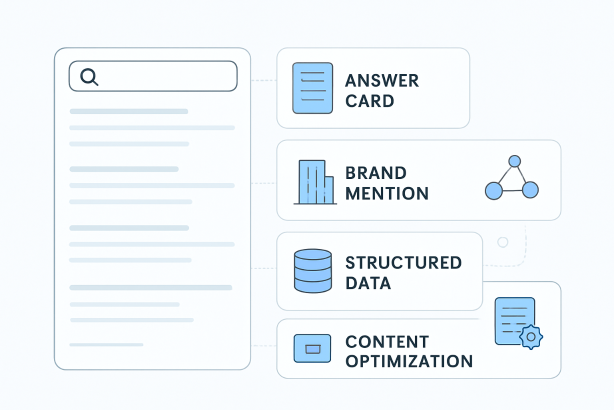
- Search results are more answer-rich. Users often see maps, product views, FAQs, business information, and other enhanced results before they click a standard listing.
- Local intent remains dominant for service-led businesses. Search engines continue to reward businesses that clearly show location relevance, service specificity, and operational legitimacy.
- Technical quality is a baseline, not a bonus. Crawl issues, duplicate pages, slow loading, and poor mobile usability can suppress otherwise strong content.
- Trust signals matter more. Real business details, consistent branding, clear policies, visible expertise, and strong review ecosystems help reinforce credibility.
- Content must support decisions. Generic articles written only to capture keywords are weaker than pages that help users compare options, understand pricing models, evaluate fit, and take action.
The takeaway is straightforward: small business SEO now rewards coherence. Your pages, local listings, technical setup, and conversion paths need to work together.
The 2026 framework: best practices for SEO for small business
1. Start with search intent, not just keyword volume
Strong keyword research for small business begins with what a customer is trying to do, not with a spreadsheet sorted by search volume. A search like “roof repair near me” has a very different intent from “how long does roof repair take” or “roof repair vs replacement.” If you treat those queries as interchangeable, your pages will underperform.
In practice, build your strategy around four intent groups:
- Service intent: pages for the core services you sell
- Location intent: pages for service areas or physical locations
- Commercial research intent: comparison, pricing, timeline, and fit-based content
- Supportive informational intent: educational content that builds relevance and internal linking depth
For many small businesses, the biggest keyword mistake is prioritizing broad informational topics before service visibility is secured. If your main money pages are thin, poorly structured, or unclear, publishing more blog posts will not solve the core issue.
2. Build service pages that deserve to rank
Your service pages are usually the commercial center of your SEO program. In 2026, those pages need to do more than repeat a keyword. They should explain the offer clearly, show who it is for, outline the process, answer objections, and make the next step obvious.
Effective service pages typically include:
- A clear headline aligned with the primary service term
- A concise summary of the service and the outcome
- Specific sub-sections for use cases, industries, or job types
- Trust elements such as certifications, reviews, guarantees, or team experience where appropriate
- Frequently asked questions based on real buyer concerns
- Strong internal links to related services, locations, and supporting resources
- A visible call to action above and below the fold
This is where on-page SEO still makes a measurable difference. Use the primary phrase naturally in the title tag, H1, introduction, and relevant subheads. Add descriptive alt text where useful. Keep URLs clean. Most importantly, make the page genuinely better than the alternatives in the search results.
3. Treat local SEO as a revenue channel, not a side task
For service businesses, clinics, restaurants, trades, agencies, and many retailers, local SEO for small business is often the shortest path from search visibility to revenue. Yet it is still common to see local optimization handled casually, as if setting up a profile once is enough.
In 2026, the strongest local programs are consistent across every touchpoint. That includes your site, your business listings, your review flow, and your location-specific content.
Focus on the basics that still move the needle:
- Complete and maintain your Google Business Profile optimization
- Use accurate categories, business hours, service areas, and contact details
- Upload high-quality images that reflect the business realistically
- Publish updates when relevant, especially around services, seasonal demand, or operational changes
- Actively request reviews and respond to them professionally
- Keep your name, address, and phone details consistent across major directories
- Create location pages only where you can provide unique, useful local detail
A common mistake is publishing dozens of near-identical city pages. If the content is only a template with the place name swapped out, it rarely becomes a durable advantage. Better to publish fewer, stronger pages with local proof, service detail, and relevance.
4. Refresh your technical SEO baseline
Technical SEO for small business does not need to be complex, but it does need to be clean. Search engines cannot reward pages they struggle to crawl, understand, or index correctly. In 2026, technical issues are often the reason a site plateaus even after publishing solid content.
Review these areas regularly:
- Indexation: important pages should be indexable, while low-value duplicates, filter clutter, or thin tag pages should be controlled
- Site architecture: your most important pages should be reachable in a few clicks and grouped logically
- Internal linking: use contextual links to connect services, locations, and related educational content
- Page speed and mobile usability: reduce friction, especially on lead-gen pages
- Canonicalization: avoid duplicate URL variations competing with one another
- Structured data: where appropriate, help search engines understand business, product, review, or FAQ information
- Redirect hygiene: fix broken links and remove redirect chains after site changes
Many small businesses only look at technical SEO during a redesign or after traffic drops. That is too late. Technical health should be part of regular maintenance, because even minor issues compound over time.
5. Build topical depth with practical content clusters
Publishing content still matters, but the standard for usefulness is higher. In 2026, content should help your site cover the topic areas that matter to customers at every stage of the buying journey.
A practical cluster often includes:
- A primary service page
- Supporting pages for related services or variants
- Commercial guides such as pricing, timelines, comparisons, and common mistakes
- FAQ-style resources based on sales and customer support conversations
- Location pages where demand and relevance justify them
This approach is more effective than producing disconnected blog posts with no clear path back to conversion pages. Every new article should strengthen a service area, answer a recurring objection, or support internal linking to a revenue page.
If you run an online store, the same rule applies to ecommerce SEO for small business. Category pages, subcategory pages, product pages, and buying guides should work together rather than compete for the same terms.
6. Add visible trust signals across the site
Trust is no longer confined to the about page. Small business websites that perform well tend to make credibility easy to verify. They show who they are, how they work, where they operate, and why a customer should feel comfortable choosing them.
Useful trust signals include:
- Clear business contact information
- Detailed service descriptions and realistic expectations
- Team, founder, or practitioner information where relevant
- Review integration on key commercial pages
- Transparent policies, warranties, or service guarantees where applicable
- Project photos, menus, portfolios, or product detail that reflects the real offer
Trust signals support both rankings and conversions. They help search engines interpret legitimacy, but they also reassure visitors who are deciding whether to call, book, request a quote, or buy.
7. Optimize titles and snippets for clicks, not just keyword placement
Search visibility without clicks is not enough. One of the most practical best practices for SEO for small business in 2026 is to improve how your listings compete in the results page itself.
That means writing title tags and meta descriptions that do more than include the target phrase. They should communicate relevance and value quickly. For example, a service page title can pair the service with the location and a trust or benefit angle. A meta description can clarify the offer, audience, and action.
Good snippet writing often improves performance without publishing new pages. If a page ranks reasonably well but underperforms, test whether the search result is too generic compared with other listings.
8. Make conversion paths part of your SEO strategy
Small business owners do not need traffic for its own sake. They need leads, bookings, calls, quote requests, store visits, and sales. That is why your small business SEO checklist should include conversion design alongside rankings and content.
Key questions to ask on every important landing page:
- Is the primary action obvious within seconds?
- Can visitors contact you without friction on mobile?
- Do forms ask only for the information you actually need?
- Are testimonials, trust badges, or review signals visible near decision points?
- Does the page answer common objections before the user has to leave and search again?
A page that ranks in position four but converts efficiently can be more valuable than a page that ranks higher and leaks intent. SEO for small business works best when traffic and conversion strategy are planned together.
9. Monitor performance like a system, not a one-off campaign
Search performance is never fully finished. Pages age, competitors update content, technical issues emerge, and local dynamics shift. The right mindset for 2026 is to treat SEO as an operating rhythm.
Your monthly review should cover:
- Which pages are gaining or losing visibility
- Which pages are attracting clicks but not conversions
- New keyword opportunities from search queries and customer conversations
- Technical warnings, broken links, and indexing changes
- Review velocity and local listing accuracy
- Content refresh opportunities for aging but valuable pages
This turns SEO into a managed growth channel instead of a sporadic project that gets attention only when traffic dips.
Where small businesses should prioritize first in 2026
Not every business should do everything at once. The smartest approach is sequencing. Fix the assets closest to revenue first, then expand.
| Business situation | First SEO priority | Next step | Primary KPI |
|---|---|---|---|
| Local service business with weak lead flow | Core service pages and Google Business Profile | Location pages and review generation | Qualified calls and quote requests |
| Established business with traffic but low conversions | On-page messaging and conversion path improvements | Snippet optimization and internal linking | Lead rate and booking rate |
| New business with limited authority | Technical foundation and core page quality | Topical support content and citations | Indexed pages and first-page visibility for priority terms |
| Small ecommerce store | Category architecture and product page optimization | Buying guides and collection-level internal links | Organic revenue and product page conversions |
This is often the difference between progress and frustration. Small businesses struggle when they spread effort across too many low-impact tasks. Prioritization is a competitive advantage.
The mistakes that still hold back SEO for small business
Even in 2026, the same avoidable errors show up repeatedly:
- Publishing thin pages at scale. More URLs do not automatically create more authority.
- Ignoring local details. Inconsistent business information and weak local relevance undermine visibility.
- Targeting one keyword per page without considering intent. This creates shallow content and poor user alignment.
- Separating SEO from conversion design. Rankings that do not produce action are only partial wins.
- Letting technical debt accumulate. Broken pages, duplicate content, and crawl waste quietly suppress growth.
- Failing to refresh valuable content. Old but important pages should be reviewed, updated, and strengthened before new low-priority pieces are added.
If you remove these blockers and focus on the fundamentals, most small businesses can create meaningful organic momentum without trying to imitate enterprise brands.
Turn your SEO plan into a repeatable growth system
Knowing what to fix is one challenge. Keeping audits, page improvements, issue tracking, and optimization work moving every month is another. If you want a clearer way to prioritize technical fixes, content opportunities, and on-page improvements, explore Rabbit SEO. It is built to help businesses turn scattered SEO tasks into a consistent workflow that supports real growth.
Conclusion: the winning approach to SEO for small business in 2026
The best practices for SEO for small business in 2026 are not flashy. They are disciplined. Start with intent-led keyword targeting. Strengthen service and location pages. Treat local SEO as a serious acquisition channel. Maintain a clean technical foundation. Publish supporting content that helps buyers make decisions. Add visible trust signals. Improve click-through rates and conversion paths. Then review performance consistently.
That is what durable small business SEO looks like now: fewer shortcuts, more clarity, and a tighter connection between search visibility and business outcomes. If your site can clearly show what you offer, where you operate, why you are credible, and how a customer should act next, you will be aligned with what search rewards in 2026.