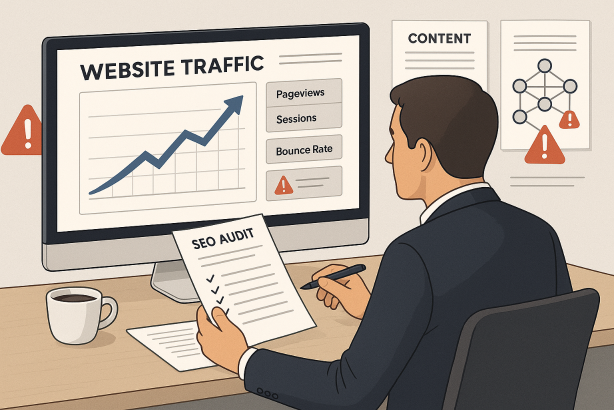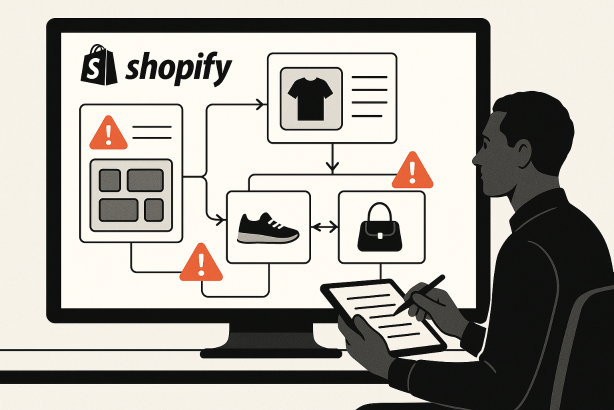

SEO for Shopify is often treated like a checklist problem: install an app, fill in meta titles, compress a few images, and expect rankings to follow. But when you review underperforming stores closely, a different pattern appears. The biggest losses usually come from repeated strategic mistakes: weak collection pages, crawl waste, duplicate content, thin product templates, broken internal linking, and poor decisions around product lifecycle pages.
This is where a case-study mindset matters. Across store audits, the same issues show up again and again, even on brands with strong products and decent design. The lesson is simple: success with SEO for Shopify depends less on isolated tweaks and more on avoiding structural mistakes that quietly cap organic growth.
Below are the most common errors to avoid, why they matter, and what to do instead.
| Mistake | Why It Hurts | Better Approach |
|---|---|---|
| Ignoring collection page strategy | Misses category-level search intent | Optimize collections as landing pages |
| Letting filtered URLs get indexed | Creates crawl waste and duplication | Control indexation and internal linking |
| Using supplier copy | Weakens relevance and differentiation | Write original product and category copy |
| Poor internal linking | Key pages stay buried | Link from navigation, blogs, and related products |
| Bloated apps and media | Slows crawling and user experience | Reduce unnecessary scripts and heavy assets |
| Mishandling out-of-stock pages | Loses link equity and search demand | Preserve valuable URLs where possible |
Why SEO for Shopify underperforms on otherwise good stores
Many Shopify stores do not have an effort problem. They have a prioritization problem. Teams spend time on small front-end edits while larger SEO blockers remain untouched. A beautiful theme cannot compensate for shallow site architecture. Strong product photography cannot fix index bloat. And a blog will not rescue rankings if the pages that should convert are hard to crawl, hard to understand, or too thin to compete.
In audit after audit, the winning stores tend to do three things well: they map keywords to the right page types, keep the index clean, and make their money pages easy to discover internally. The mistakes below are what usually stand in the way.
SEO for Shopify mistake #1: Treating collection pages like simple navigation folders
One of the biggest missed opportunities in SEO for Shopify is underestimating collection pages. Many stores put all SEO effort into product pages, even though collection pages often align better with non-branded commercial intent such as category, style, feature, or use-case searches.
A weak collection page typically has a generic title, no intro copy, no unique merchandising logic, and no supporting internal links. It exists for browsing, not ranking.
What to do instead
- Assign a clear target keyword and intent to each priority collection.
- Write a unique title tag and H1 that match how customers search.
- Add concise introductory copy that helps both users and search engines.
- Use collection descriptions lower on the page if design constraints matter.
- Link to related sub-collections and top products from the collection page.
If your Shopify collections SEO is weak, category-level traffic usually stalls first.
SEO for Shopify mistake #2: Allowing filtered, sorted, and faceted URLs to expand the index
Filter combinations can be useful for users, but dangerous for organic search when they create large volumes of near-duplicate URLs. Color, size, material, price, availability, sort orders, and app-generated parameters can multiply faster than most teams realize.
The problem is not just duplicate content. It is also crawl inefficiency. Search engines spend time on low-value variations instead of your best collections and products.
What to do instead
- Audit which filter and sort URLs are indexable.
- Decide which filtered states deserve search visibility and which do not.
- Be careful with internal links that repeatedly surface thin parameterized pages.
- Review canonicals, robots rules, and app behavior rather than assuming defaults are enough.
This is a classic Shopify technical SEO issue: the store looks fine to shoppers, but the crawl path underneath is inefficient.
SEO for Shopify mistake #3: Publishing manufacturer or duplicate product descriptions
Duplicate copy is still common in ecommerce, especially on large catalogs. Merchants import supplier text, reuse the same wording across similar products, or lean on variant pages with almost no unique information. The result is predictable: weak differentiation, thin relevance signals, and lower confidence around which page should rank.
This does not mean every product needs a long essay. It does mean the page should add value beyond a feed import.
What to do instead
- Write original copy focused on benefits, fit, use cases, and buying questions.
- Differentiate similar products clearly instead of repeating the same template language.
- Add practical details such as materials, dimensions, compatibility, care, or feature comparisons where relevant.
- Use FAQs on important products to capture supporting long-tail intent.
Strong Shopify product page SEO starts with unique page value, not just metadata.
SEO for Shopify mistake #4: Creating keyword cannibalization between collections, products, and blog posts
Another repeated audit pattern is multiple pages competing for the same query set. A collection targets a category phrase, several products use nearly identical title structures, and a blog post also tries to rank for the same term. Instead of building authority, the store spreads signals across competing URLs.
Cannibalization is especially common when teams publish content without a page-level keyword map.
What to do instead
- Decide whether the search intent belongs to a collection, product, article, or landing page.
- Map primary keywords to one dominant URL wherever possible.
- Use blog content to support collections and products, not replace them.
- Refine title tags and internal anchors so page roles are clearer.
Good SEO is not about creating more pages. It is about making each page type serve a distinct purpose.
SEO for Shopify mistake #5: Weak internal linking to the pages that matter most
Stores frequently hide their highest-opportunity pages several clicks deep while blog posts, tag archives, or low-priority pages absorb internal attention. That weakens crawl access and dilutes authority.
Internal linking is one of the fastest areas to improve because it usually does not require development-heavy work. It requires better editorial judgment.
What to do instead
- Link to priority collections from the homepage, navigation, and seasonal features.
- Add contextual links from blog articles to relevant collections and products.
- Use related categories, featured ranges, and comparison modules where useful.
- Make breadcrumbs consistent and crawlable.
- Avoid orphaned collections or products that rely only on site search to be found.
When a Shopify SEO audit reveals strong pages with weak internal support, rankings often improve once those link pathways are fixed.
SEO for Shopify mistake #6: Using a shallow content strategy that stops at products
Some stores try to rank commercial pages without any surrounding topical support. Others publish blog content, but it sits disconnected from the buying journey. In both cases, the store misses the chance to build relevance around problems, comparisons, care advice, use cases, and pre-purchase questions.
Content should support commerce, not distract from it.
What to do instead
- Create articles that answer real questions customers ask before buying.
- Link those articles to relevant collections and products with clear anchor text.
- Build supporting content clusters around your most important categories.
- Refresh older posts so they continue passing value to current money pages.
This is one of the most fixable ecommerce SEO mistakes: publishing content without a commercial connection.
SEO for Shopify mistake #7: Letting apps create thin or low-value indexable pages
Review apps, wishlist tools, search apps, store locators, customer account features, and other add-ons can create URL paths that were never meant to rank. Over time, these pages clutter the index, consume crawl attention, and sometimes introduce duplicate metadata or structured data conflicts.
The issue is not that apps are bad. It is that every app changes the SEO surface area of the store.
What to do instead
- Review new URLs after app installations.
- Check whether apps generate indexable pages, duplicate titles, or conflicting schema.
- Remove or limit add-ons that introduce more SEO overhead than commercial value.
- Include app review in regular technical audits, not just launch checklists.
A clean Shopify store is usually not the one with the most plugins. It is the one with the most disciplined plugin decisions.
SEO for Shopify mistake #8: Relying on default templates for titles, headings, and meta descriptions
Template logic helps at scale, but overused templates create repetitive SERP snippets and vague on-page signals. If every title follows the same structure and every collection description sounds interchangeable, the store loses relevance and click appeal.
This is especially damaging on category pages where the strongest ranking opportunities often live.
What to do instead
- Customize metadata for top collections, bestsellers, and high-margin products.
- Make title tags specific, descriptive, and intent-matched.
- Use headings that reflect what the page actually offers.
- Write meta descriptions to improve click quality rather than stuffing keywords.
Templates should support scale, not erase distinctions between important pages.
SEO for Shopify mistake #9: Ignoring site architecture as the catalog grows
Growth often creates messy navigation. New collections are added ad hoc. Seasonal pages stay in menus long after their relevance passes. Important subcategories sit too deep, while duplicated pathways confuse hierarchy. Search engines can still crawl much of this, but they understand it less clearly, and users feel the friction first.
Strong Shopify site architecture should make the business logic obvious: what the core categories are, how they relate, and which pages deserve prominence.
What to do instead
- Keep high-value collections accessible within a few clicks.
- Group categories in ways that reflect search behavior and buying logic.
- Remove outdated or redundant menu paths.
- Standardize breadcrumbs and navigation labels.
- Audit whether URL structure, menus, and internal links tell the same story.
When architecture is unclear, SEO has to work harder than it should.
SEO for Shopify mistake #10: Overlooking performance issues caused by media and app bloat
Shopify themes can be visually polished yet operationally heavy. Oversized images, autoplay media, stacked tracking scripts, and multiple app libraries slow down rendering and create friction for both users and crawlers. Performance alone is not a complete SEO strategy, but it amplifies or limits everything else.
What to do instead
- Compress and properly size product and collection imagery.
- Limit unnecessary scripts and remove unused apps.
- Be selective with motion-heavy features that add little commercial value.
- Review templates page by page instead of assuming every page needs the same assets.
In many audits, speed problems are not caused by Shopify itself. They are caused by decisions layered on top of it.
SEO for Shopify mistake #11: Mishandling out-of-stock and discontinued product pages
Product lifecycle decisions have real SEO consequences. A common mistake is deleting unavailable products too quickly or redirecting them too aggressively to unrelated pages. That can erase rankings, link equity, and useful user signals.
Not every unavailable product should remain live forever. But the decision should be deliberate.
What to do instead
- Keep temporarily out-of-stock pages live when the product will return.
- Show availability context, restock expectations, and alternative products.
- Use redirects only when there is a close substitute or a logical replacement category.
- Retire permanently obsolete URLs thoughtfully instead of in bulk without review.
This is where Shopify duplicate content and thin-page concerns can intersect with revenue decisions. SEO should be part of merchandising workflows, not an afterthought.
A practical audit order for SEO for Shopify
If several of these issues apply to your store, avoid fixing them randomly. A useful sequence is:
- Clean indexation and crawl waste.
- Clarify site architecture and internal linking.
- Upgrade collection pages for core commercial intent.
- Improve product page uniqueness and content quality.
- Review apps, speed, and structured data conflicts.
- Set rules for out-of-stock and discontinued URLs.
- Build content that supports priority categories and products.
This order works because it protects crawl efficiency first, then strengthens page relevance, then expands topical support.
When to bring in outside help
If your store has a growing catalog, multiple collections competing for similar queries, or technical clutter introduced over time, an external review can save months of internal trial and error. A strong SEO partner should not just hand over a checklist. They should help you decide which issues are truly suppressing growth and which ones can wait.
If your store shows even three of the patterns above, it is a good time to invest in a focused Shopify SEO audit with Rabbit SEO. The right audit should give you a clear action order, page-type strategy, and a practical roadmap for turning search visibility into revenue.
Conclusion: better SEO for Shopify starts with the mistakes you stop making
The most effective SEO for Shopify work is rarely glamorous. It is usually the disciplined correction of problems that quietly repeat across the store: weak collections, unnecessary indexation, thin product copy, poor internal linking, cluttered architecture, and unmanaged product lifecycle pages.
That is the real lesson from repeated audit patterns. Stores do not need more SEO activity for the sake of activity. They need fewer hidden mistakes. Fix those, and the rest of your strategy has room to work.