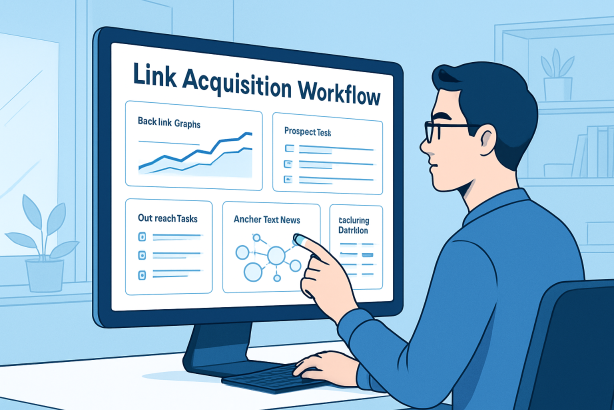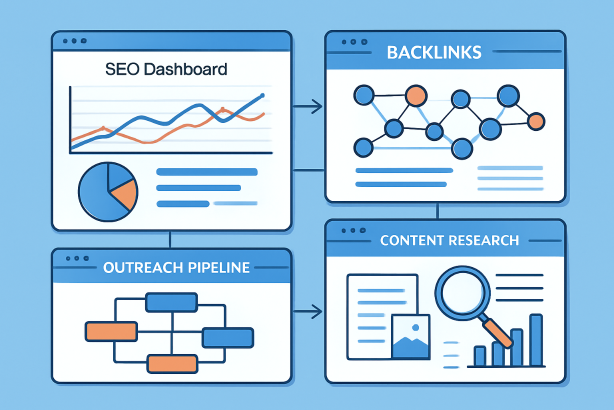

SEO for ecommerce is rarely won by one change. It comes from improving the pages that matter most, making the site easier for search engines to crawl, and building authority through links that support commercial rankings. If you sell products online, the challenge is not simply getting traffic. It is attracting the right search intent, sending that traffic to the right pages, and turning visibility into revenue.
This question-and-answer guide covers the essentials of SEO for ecommerce with a practical emphasis on link building, site structure, and page optimization. Whether you manage a growing store or a large catalog, the goal is the same: build a search presence that compounds over time instead of relying only on paid acquisition.
What makes SEO for ecommerce different from other types of SEO?
Ecommerce SEO has more moving parts than a typical brochure site or service business website. You are not optimizing a handful of pages. You are often dealing with category pages, subcategories, product pages, filters, variants, stock changes, seasonal landing pages, and changing commercial priorities.
That means SEO for ecommerce depends on balancing three things at once:
- Relevance: matching pages to the right search intent.
- Scalability: applying best practices across dozens, hundreds, or thousands of URLs.
- Authority: earning links and trust signals strong enough to rank commercial pages.
Unlike informational publishing, ecommerce SEO must protect crawl efficiency, avoid duplicate or thin page issues, and prioritize pages that can drive sales. It also needs stronger internal linking and smarter link acquisition because product and category pages are usually harder to rank than blog content alone.
Which pages should you optimize first in SEO for ecommerce?
Start with pages that sit closest to revenue and have realistic ranking potential. In most stores, that means category pages first, then high-priority product pages, then supporting content.
| Page type | Priority | Why it matters | Link opportunity |
|---|---|---|---|
| Core category pages | Very high | Often target strong commercial keywords and can rank for broad buying intent | Excellent targets for internal links and selected external links |
| Best-selling product pages | High | Convert well and can capture long-tail product searches | Usually supported by links to categories and guides rather than direct outreach |
| Subcategory pages | High | Capture more specific demand with clearer intent | Good internal link hubs |
| Buying guides and comparison content | Medium to high | Bring in research-stage traffic and earn links naturally | Strong assets for ecommerce link building |
| Low-demand or duplicate product URLs | Low | Often not worth heavy SEO investment | Minimal direct link value |
If resources are limited, review search demand, margin, competitiveness, and internal business priorities together. The best page to optimize is not always the page with the highest traffic potential. It is often the page where rankings, conversions, and commercial value intersect.
How should keyword research for ecommerce be approached?
Keyword research for ecommerce should be organized by search intent and page type, not by one giant list of terms. A store usually needs separate keyword sets for:
- Category pages: broader commercial terms such as product types, styles, and use cases.
- Subcategory pages: more specific modifiers like size, material, feature, or audience.
- Product pages: model-specific, brand-specific, and variant-based searches.
- Editorial content: questions, comparisons, care instructions, and how-to queries.
Look for keyword patterns that indicate purchase intent. Words like buy, best, for, near, compare, affordable, premium, and specific product attributes often signal useful opportunities. Then map those phrases to the page that deserves to rank for them.
A common mistake is trying to make a product page rank for a broad category term, or trying to force a blog post to rank for a high-converting money keyword that should belong to a category page. Good keyword mapping prevents cannibalization and keeps internal linking cleaner.
What does a strong category page need to rank?
Category page SEO is central to most ecommerce growth because category pages usually align best with high-value commercial searches. A strong category page should do more than list products. It should help search engines understand the page theme and help users move toward a purchase.
Key elements include:
- A clear primary heading aligned with the target keyword.
- Useful introductory copy that explains the category without bloating the page.
- Logical faceted options that improve navigation without creating indexing chaos.
- Strong product grid relevance so the page truly satisfies the query.
- Supporting content blocks such as buying considerations, FAQs, or feature highlights.
- Internal links to related categories, guides, and top products.
Category pages also tend to be the best commercial destination for external links. If your link building points only to the homepage or blog, you may build domain strength without improving rankings for the pages that actually drive sales. A better approach is to create link-worthy supporting content and channel authority into your commercial categories through internal links.
How should product page SEO be handled?
Product page SEO should focus on specificity, trust, and differentiation. Search engines see many product pages that are nearly identical across stores, especially when merchants reuse manufacturer descriptions. To compete, you need product pages that offer unique value.
Important product page elements include:
- Original product descriptions written for users, not copied from suppliers.
- Descriptive titles that include the product name and important attributes.
- Helpful on-page content such as fit, compatibility, dimensions, care, use cases, or feature details.
- Strong media with optimized image file names and alt text where appropriate.
- Structured information presented clearly for shoppers.
- Relevant internal links back to categories, accessories, bundles, or guides.
Not every product page deserves equal SEO investment. Prioritize products with stable availability, meaningful search demand, and good conversion potential. For short-life inventory, it may be smarter to strengthen the category page and support products through internal linking rather than building standalone campaigns around each SKU.
How important is technical SEO for ecommerce?
Technical SEO for ecommerce is foundational. Even the best content and link building will underperform if search engines waste crawl budget on duplicate pages, parameter URLs, broken pathways, and thin indexable variations.
Technical priorities usually include:
- Crawl control for filters, sorting, and parameter-heavy URLs.
- Canonical strategy for variants and duplicate-like pages.
- Indexation hygiene so low-value pages do not crowd out important ones.
- Site speed and mobile usability to support both rankings and conversions.
- Clean pagination and navigation logic that search engines can follow.
- Handling out-of-stock and discontinued products without losing valuable equity unnecessarily.
Technical work is especially important in ecommerce because small mistakes scale fast. A weak rule in templates, faceted navigation, or canonical tags can affect thousands of URLs at once. That is why audits should not stop at spotting issues. They should prioritize fixes by business impact.
Why is internal linking so important for SEO for ecommerce?
Internal linking for ecommerce helps search engines understand page importance, discover deeper URLs, and pass authority from stronger pages to commercial targets. It also improves user flow, which matters on large stores where shoppers can easily get lost.
A good internal linking system should connect:
- Homepage to major revenue-driving categories.
- Category pages to subcategories and top products.
- Products to parent categories, related items, and useful guides.
- Editorial content to category and product pages using natural commercial anchors.
This is one of the most overlooked bridges between content marketing and SEO for ecommerce. If your best links point to blog posts but those posts do not funnel authority to money pages, your link building is incomplete. Supporting content should be created with a path in mind: earn visibility, earn links, then channel that strength into high-priority category and product pages.
What role does link building play in SEO for ecommerce?
Ecommerce link building is the authority layer that helps commercial pages compete. In many sectors, strong on-page work and technical cleanliness are not enough. The sites that rank well for competitive product and category terms usually have stronger referring domains, better topical relevance, and a more deliberate authority strategy.
For ecommerce, link building should support three outcomes:
- Domain trust through consistent, high-quality mentions and backlinks.
- Page-level support for strategic category pages and major commercial themes.
- Topical depth by earning links to useful assets related to your product space.
The mistake is treating link building as a volume game. A handful of relevant links from respected industry publications, niche resources, associations, partners, or strong editorial placements can matter far more than a large number of weak links with no context.
Which kinds of backlinks actually help an ecommerce store?
The best backlinks for ecommerce usually share four traits: relevance, editorial context, real traffic potential, and believable placement. Good links tend to come from pages where your brand, product category, or expertise naturally belongs.
High-value link sources often include:
- Industry publications covering your niche.
- Gift guides, roundups, and resource pages where your products are a genuine fit.
- Supplier, manufacturer, distributor, or retail partner pages when relationships justify inclusion.
- Association and membership pages relevant to your market.
- Press-worthy stories tied to launches, research, seasonal trends, or community initiatives.
- Editorial content links earned by publishing useful comparison, care, sizing, or expert guidance content.
Anchor text should remain natural. Over-optimized anchors aimed aggressively at exact-match commercial terms can create risk and usually look unnatural. In most campaigns, a mix of branded, topical, and descriptive anchors is healthier than forcing the same keyword repeatedly.
How can you earn links without relying on spammy tactics?
The cleanest path is to create assets people in your market can genuinely reference, then pitch them selectively. For ecommerce brands, that often means publishing content that sits just above the product layer rather than trying to make every product page itself link-worthy.
Examples of link-earning assets include:
- Buying guides that simplify a complex category.
- Comparison pages that help users choose between options.
- Care, maintenance, setup, or sizing resources.
- Trend roundups or seasonal planning pages with real utility.
- Curated expert resource hubs for a specific audience.
Then connect those assets to your revenue pages with strong internal linking. This is where link building and SEO for ecommerce become one system instead of separate channels. You earn links to the pages that can attract them, then pass value toward the pages that convert.
You can also pursue relationship-based links through partnerships, stockist listings, event sponsorships, expert commentary, trade organizations, and relevant community involvement. These links are often more durable because they reflect real business connections.
How should faceted navigation be handled for SEO for ecommerce?
Faceted navigation helps shoppers filter large inventories, but it can also create a flood of near-duplicate URLs. Left unchecked, filters for color, size, price, brand, and availability can generate thousands of low-value combinations that clutter the index.
The right approach is to decide which filtered views deserve search visibility and which should remain purely functional. Some filter combinations may map to genuine keyword demand and can justify indexable landing pages. Many others should not.
In practice, that means:
- Keeping a clear distinction between SEO landing pages and utility filters.
- Preventing low-value parameter combinations from becoming index bloat.
- Building permanent subcategory pages where there is meaningful search demand.
- Maintaining consistent internal linking to approved indexable pages.
This is one of the most important architecture decisions in large-store SEO. It affects crawl depth, duplicate content patterns, and how much authority your most important pages can retain.
How do you measure whether SEO for ecommerce is working?
Traffic alone is not enough. The right measurement framework for SEO for ecommerce connects visibility to commercial outcomes.
Key indicators include:
- Organic rankings for priority category and product terms.
- Organic landing page performance by page type.
- Click-through rates from search results.
- Revenue and conversions from organic traffic.
- Assisted conversions from informational content.
- Indexation and crawl health for large catalogs.
- Link acquisition quality and how earned links support target pages.
Look at page groups, not just site-wide averages. If blog traffic rises but category page visibility stalls, your strategy may be unbalanced. If rankings improve but revenue does not, keyword targeting or page intent may be off. Good reporting should show not only what moved, but why it moved and whether it helped the business.
What are the most common SEO for ecommerce mistakes?
Most underperformance comes back to a few repeat issues:
- Thin or duplicated category and product content.
- Poor keyword mapping that causes page cannibalization.
- Uncontrolled faceted navigation that creates index bloat.
- Weak internal linking between editorial content and money pages.
- Over-reliance on homepage links instead of supporting commercial destinations.
- Ignoring discontinued or out-of-stock URL strategy.
- Chasing low-quality backlinks instead of relevant authority.
Another frequent mistake is treating SEO as a set-and-forget project. Ecommerce sites change constantly. New collections launch, products disappear, site templates evolve, and category priorities shift. The strategy has to be maintained, not just implemented once.
What is a practical 90-day plan for improving SEO for ecommerce?
A focused plan usually outperforms scattered optimization. Here is a practical starting framework:
Days 1 to 30: Audit and prioritization
- Identify top category, subcategory, and product opportunities.
- Review indexation, templates, faceted navigation, and internal linking.
- Map target keywords to the correct page types.
- Choose commercial pages that need direct SEO support first.
Days 31 to 60: On-page and technical implementation
- Improve category copy, titles, headings, and supporting blocks.
- Upgrade priority product pages with original, useful content.
- Fix crawl and indexation issues affecting scale.
- Strengthen internal links from navigation, collections, and content.
Days 61 to 90: Link building and content support
- Create one or more link-worthy assets tied to commercial themes.
- Run targeted outreach to relevant publications and resource pages.
- Secure partnership and relationship-based links where appropriate.
- Measure which supported pages gain visibility and refine the next wave.
This sequence matters. If you push link building before page quality and site structure are ready, you may win authority without fully converting it into rankings or sales.
When should you bring in outside help?
If your store has a growing catalog, complex filtering, multiple templates, or strong competition, outside support can shorten the path significantly. The right partner should not just deliver isolated fixes. They should connect technical SEO, on-page improvements, and link building into one commercial strategy.
If you want a clearer growth plan for SEO for ecommerce, stronger category-page performance, and link building that supports the pages that actually sell, Rabbit SEO can help. A smart campaign aligns authority building with site architecture, keyword intent, and revenue priorities instead of treating rankings as an abstract metric.
Final answer: what matters most in SEO for ecommerce?
The most important principle in SEO for ecommerce is alignment. Your keyword targets, page types, technical setup, internal links, and backlink strategy all need to support the same commercial goals. When they do, category pages become stronger, product pages become more competitive, and your site earns visibility that compounds.
In practice, that means optimizing the pages closest to revenue, keeping the site crawlable and clean, and investing in link building that strengthens topical authority rather than inflating vanity metrics. Do those things consistently, and SEO for ecommerce becomes more than a traffic channel. It becomes a durable growth asset for the store.